Tuesday, June 10, 2008

Give us pleasure in the flowers to-day


A Prayer in Spring


Oh, give us pleasure in the flowers to-day;
And give us not to think so far away
As the uncertain harvest; keep us here
All simply in the springing of the year.

Oh, give us pleasure in the orchard white,
Like nothing else by day, like ghosts by night;
And make us happy in the happy bees,
The swarm dilating round the perfect trees.

And make us happy in the darting bird
That suddenly above the bees is heard,
The meteor that thrusts in with needle bill,
And off a blossom in mid air stands still.

For this is love and nothing else is love,
The which it is reserved for God above
To sanctify to what far ends He will,
But which it only needs that we fulfil.

...Robert Frost


Above Shirley Temple peony.

Left unknown silvery-blue clematis.

Below Goldfinch on a thistle sock.


Tiny splashes of sunlight flying about the garden.


They seem to prefer this sock to any other of the thistle feeders I've tried.

Peonies

This morning the green fists of the peonies are getting ready to break my heart as the sun rises.


(I love that line from Mary Oliver's poem--more below.)


This week the peonies finally make their long awaited appearance. They usually bloom about two weeks earlier just after Memorial Day.


They are so very welcome whenever they choose to bloom.


Last year I added two Shirley Temples to my collection. Most are older varieties. They were planted on the farm before I moved here.
I love the huge doubles, the ones packed with so many petals you can't find the centers. The ones that smell so cloyingly sweet they scent a room when you bring them inside.

The heavy rain and high winds were wreaking so much havoc on the blooms, I cut most of them to enjoy inside. My house is full and so is the office.

Festiva Maxima above white with the red highlights is one of my all time favorites. The dark pink is an old unknown variety. The white below is probably Festiva also.

This fall perhaps I'll research some early bloomers and add them. It would be nice to extend the season a little longer.


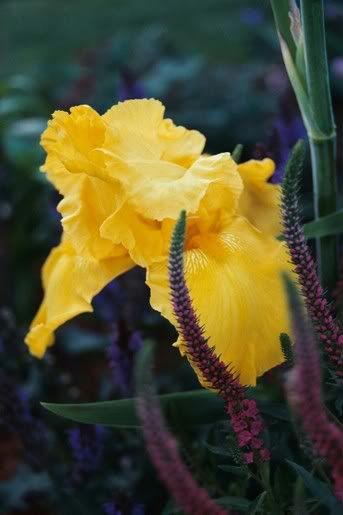
I added this yellow iris to mix in some color. I'm not sure of the cultivar, maybe Pure and Simple. It's a stunner with the sun-bright yellow and the graceful ruffles.


Peonies by Mary Oliver

This morning the green fists of the peonies are getting ready
to break my heart
as the sun rises,
as the sun strokes them with his old, buttery fingers
and they open ---
pools of lace,
white and pink ---
the flowers bend their bright bodies,
and tip their fragrance to the air,
and rise,
their red stems holding

all that dampness and recklessness
gladly and lightly,
and there it is again ---
beauty the brave, the exemplary,

Friday, June 6, 2008

What's blooming today and a really good book

Hopefully today's blooms will still be standing after last night's storms. It never fails, when the peonies and iris bloom, we always get rain, hail and high winds. Those huge, heavy flowers fill up with water and topple over onto the mud.


I've had this yellow iris for years. One of my favorites.


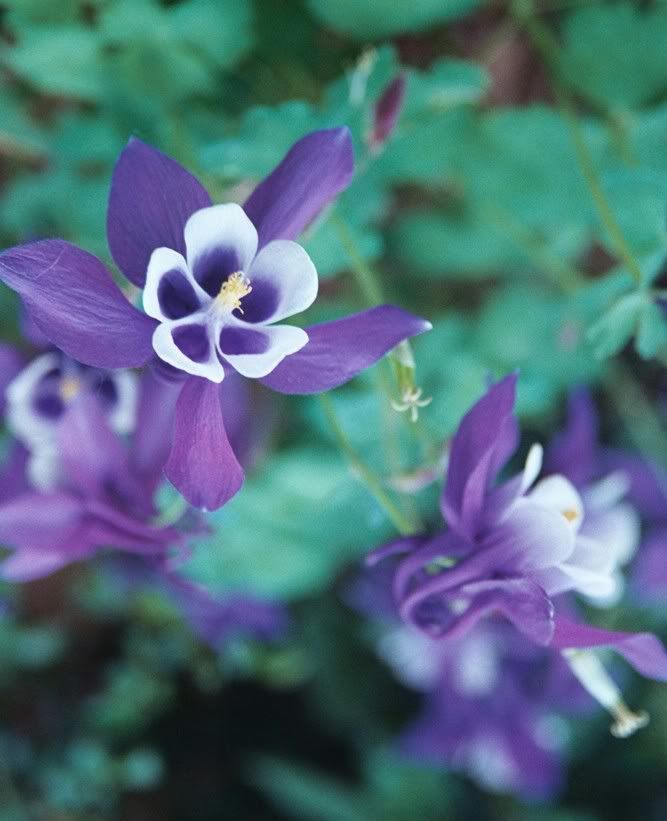
Below: A photo from some time ago. These tough little columbines will grow anywhere. They have such a delicate bloom but they are tough, drought tolerant very cold hardy.


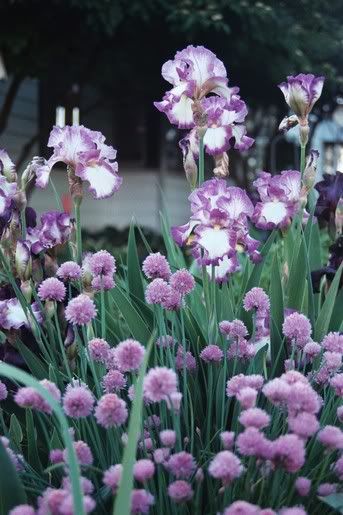
Here are a few iris that survived the rain and wind.

A lucky accident that the iris just happen to blend so well with the chives.


This weekend I'm rereading Virginia Lanier's first book Death in Bloodhound Red. If you are a mystery reader and/or a dog lover, you will want to read this wonderful series. Lanier's character, Jo Beth Sidden, is a professional dog trainer who contracts with local law enforcement to search out people lost in the near by Okefenokee Swamp. Her search and rescue missions are usually harrowing. Avoiding quicksand, poisonous snakes, and her murderous ex-husband Bubba are among the challenges she and her dogs face. You will also learn a lot you never knew about tracking with dogs. Sadly, Virginia Lanier passed away a few years ago so her novels are all the more precious because there will never be any more.

Wednesday, June 4, 2008

What's interesting in the garden today

On these damp, still evenings my yard is filled with the scent of pagoda dogwood. Not quite like lilac but a similar sweet, heavy fragrance.

No peonies yet but the buds are swelling and showing some color.

The salvia is looking good. I have several hybirds, this one is May Night. It's a great plant, blooms all summer and drought tolerant. The dead heading is what I don't like. Tedious. If it's not deadheaded it won't continue to flower so all summer I'm snipping the spires.

This photo shows two viburnam planted side by side with flowering branches entertwined. Unusual because they don't always bloom at the same time. This season bloom times are behind schedule because of the cold temperatures in April and May.


This is supposed to be TB Iris Gnus Flash. It isn't even close. Mislabeled packaging. Up close it isn't my favorite--washed out colors and contrasts. Seen from across the lawn it's more appealing. A splash of interesting color in front of the black iris Superstition. Last evenings rain and wind knocked Superstition completely to the ground. That's the downside of the really tall varieties.


My yellow iris is just starting to bloom. It's a great color so I'll put some photos on soon.

Tuesday, June 3, 2008

Wilding


Left is my wilding pal Toby.

According to some interesting books I’ve been reading, many of the common weeds found in my yard have more nutrition than the vegetables you buy. For example dandelions are a great dietary source of calcium, vitamins A, and K, plus the antioxidant lutein.

Purslane happens to have more Omega-3 fatty acid than any other plant plus lots of vitamin C and other stuff.

Early settlers and Indians made use of wild edibles in season and dried them for winter use. In the past 60 years or so, we have stopped harvesting wild greens. Now we rely on things we buy. You’re probably thinking, who wants to eat something growing in the lawn? I look at it this way. Unless I put herbicides or fertilizers on the lawn, these greens should be safer than fruits and vegetables imported from who knows what foreign places with who knows what standards of hygiene. Plus, I know fruit and vegetable farmers put every known pesticide available on their crops.

Anyway, since I have more dandelions and various weeds than grass, why not turn that to my advantage.

There are a lot of books and internet sites with lots of recipes. I decided not to follow any of the recipes but to just use weeds in the foods I already prepare. First I threw a big handful of mixed weeds into a vat of homemade vegetable soup. No difference in the taste, but it felt good knowing the extra nutrients were in there.

I made up a salad with my garden lettuce plus garlic mustard, lambs quarters, and purslane. Added some feta cheese, dried cranberries, pecan pieces, baked chicken pieces and raspberry vinaigrette. I have to admit, I couldn’t taste the wild stuff but that was OK because the vitamins, minerals and omega 3 where there.

I plan to try adding some to meatloaf, soups, vegetables, omelets, and salads. Using them on sandwiches and hamburgers instead of or with lettuce. Throwing some in cake mixes or pancake batter. I might toss some in with the apples or rhubarb in a pie. I don’t think you’d notice a taste, but the foods would be just a little better for you.

Sunday evening I went wilding. Picked, rinsed and stored my stuff in the fridge for later meals. I picked a bunch of wild mint too. Rinsed it and added it to the water in ice cube trays. It will be good in iced tea and lemonade.

I'd love to hear about your wilding experience and stories. A lot of people in my area love hunting morels and wild asparagus. I'm a little afraid of the mushrooms but hope to go out with some experienced friends and learn which ones are safe and which are not.

While doing some reading on harvesting wild plants, I remembered a wonderful novel I read a long time ago. Where the Lilies Bloom by Bill and Vera Cleaver. Think I'll look for my old copy and reread it.

Important: I have to say this to anyone who might try wilding. Don’t eat anything unless you are sure it’s safe. Check out books and internet sites with photos and descriptions of edible plants. Be sure no one has sprayed chemicals on the greens you pick.

Friday, May 30, 2008

Best ever pie

Absolutely the best pie. Use fresh or frozen rhubarb stalks.

AMANA RHUBARB CUSTARD PIE

8 INCH BAKED PIE SHELL

FOR CUSTARD:

1/4 c. sugar
2 tbsp. cornstarch
1 c. milk
2 egg yolks

FOR RHUBARB SAUCE:

3 c. rhubarb, cut 1/2 inch
2/3 c. sugar
2 tbsp. water

FOR MERINGUE:

3 egg whites
1/4 tsp. cream of tartar
6 tbsp. sugar

Stir together sugar and cornstarch in small saucepan. Stir in milk and cook over medium heat, stirring constantly, until mixture thickens and boils. Beat egg yolks slightly and stir a small amount of hot milk mixture into yolks, then stir that mixture back into pan. Cook and stir until custard is thickened and smooth. Cover custard to keep warm. Toss rhubarb with sugar in small pan. Add water and cook over very low heat just until rhubarb is tender-crisp - don't let it get soft. Cover sauce.

For Meringue: Beat egg whites and cream of tartar until foamy. Beat in sugar, 1 tablespoon at a time; continue beating until stiff and glossy. Do not underbeat. Drain rhubarb sauce and fold into custard. Turn warm custard into baked pie shell. Heap meringue onto filling; spread over filling, carefully sealing meringue to edge of crust. Bake in preheated 400 degree oven 10 minutes or until a delicate brown. Cool away from draft. If not served immediately, store pie in refrigerator.


Wednesday, May 28, 2008

Views around the farm and garden


I began
this blog to share photos, ideas and thoughts. The quality of the photos is very disappointing. I suppose Blogger compresses them to limit the space required, but it is disheartening to publish good pictures and have them displayed poorly. Anyway, trust me, these were pretty scenes when I shot them.

Above, one of the new hybrid columbines.
Unfortunately, this one isn't reseeding in my garden.


Tall bearded iris Immortality. It’s slightly fragrant--an important bonus. In my garden it’s the first TB iris to bloom and it repeats later in the fall. I like iris because they are iron tough, drought tolerant and require almost no maintenance. Immortality increases quickly so I try to give it plenty of room and avoid dividing as long as possible. I’ve always thought iris look as lovely and fragile as any orchid. In fact, I'd much rather have these beauties than a hot house full of orchids and tropical blooms.


Below is Viburnum Opus, commonly called a snow ball bush. Sometimes people confuse this with hydrangea Annabelle which blooms later in the summer. I'm glad I took some photos when I did. That evening heavy rains and strong winds beat it down pretty badly. Guess I'll cut the blooms and take them into the office tomorrow.


Tuesday, May 27, 2008

Scenes from a stormy day

Saturday was dark and cool. Late in the night we had high winds with thunder and lightening. Thankfully, no tornadoes.


In the photo, a tiny wren stalks spiders among the logs.


Below a catbird calling into the coming storm.

He mimics the things he likes from other bird's songs and adds his own ‘mew’ here and there.


He keeps his prayer under his tongue.
In his whole life he has never missed the rising of the sun.
He dislikes snow.
But a few raisins give him the greatest delight.
He sits in the forelock of the lilac, or he struts
in its shadow.
…Mary Oliver


Friday, May 16, 2008

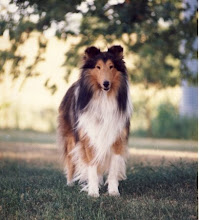
Ivan the glamorous farm dog


From birth, Ivan’s career path was to be a show dog. He belonged to a professional breeder and spent his life being bathed, groomed and hauled from one dog show to the next.


His career ended when the puppies he sired were better show dogs than their father. The owner decided to sell Ivan to have room to keep several of his pups.

I wanted another dog. I already had a little tri collie named Heather, and hoped to find another collie just as lovely. Since I worked so many hours, a puppy wasn’t going to be my best choice. An older, settled dog that didn’t require so much attention would be perfect. Ivan and I were on a collision course. I had a home that needed another dog. Ivan was a dog needing a home. We were both in the right place at the right time.

The adjustment period was hard for both of us. Who knew dogs that spent their lives in kennels couldn’t move in a straight line? Really. My farm dogs run free when I’m outside. There are no roads near my place so it is perfectly safe. On the second or third day I let the new Ivan off the leash to run with Heather. Ivan ran around in circles. Small circles to start, after a while the circles got a little bigger. I wondered if he had a brain tumor.

He also had a thing about fencing. Apparently he was used to bouncing on and off his chain link kennel fence. No chain link on the farm, but there was a lot of high tensile horse fence. The first few times Ivan’s circles intersected with this tightly strung wire he did a somersault and ended up on his back. I wondered if he was blind and had a brain tumor.

Walks with Ivan were entertaining and a little troubling. Heather would bounce down the pathway, nose to ground checking for scents. Ivan trotted in overlapping circles that progressed roundabout (more or less) down the path behind her.

Ivan’s story turns out well. He learned to run in straight lines, he started watching out for wire fence, he got interested in the scents of deer and raccoon. He still won’t wade across the creek or walk in a muddy field. I think he’s happy now even though his life is less than glamorous.

If you would like to give a dog a forever home (as they say in the rescue business) consider a collie form a rescue group. Collie Rescue of IL

Thursday, May 15, 2008

Plant a few rocks in your garden

Brown thumb? Grow rocks.

My friend Kathleen told me about a farm that sells rocks. I checked it out last week and took some photos.

Glass rocks. Shiny, colorful, garden sparklers. More informal than gazing globes. Wish I would have gotten a picture of a clear glass rock—reminds you of an iceberg left over from last winter’s storms.


If anyone wants information on glass rocks, contact:
Coysglassrock@aol.com

Photo of 2 glass rocks joining some of their rock cousins. The glass adds some color and uniqueness to a bed of hen and chicks.


Wednesday, May 14, 2008


My crabapples have outdone themselves this spring. Some years they are spectacular--some years, not so much. The cool temperatures are helping them hold their flowers longer.

I like this romantic poem by Mathilde Blind.

When the sundown's dying brand
Leaves your beauty to the tender
Magic spells of moonlight splendour,
Glimmering clouds of bloom you stand,
Turning earth to fairyland.

Cease, wild winds, O, cease to blow!
Apple-blossom, fluttering, flying,
Palely on the green turf lying,
Vanishing like winter snow

Friday, May 9, 2008

Ah, May

May. All the trials of winter are behind me now. Forgotten the painful cold, the pounds of outdoor clothing, the itchy, dry winter skin. Treacherous icy roadways are of the past. Numb fingers scraping frost from car windows are no more. Moving tons of heavy white snow from place to place is but a dim memory. The life of a gardener begins anew every May.

Winter evenings I sat by the fire with glossy gardening catalogs propped in my lap (or rather propped on the cat that was sleeping on my lap). I dreamed of variegated miscanthus gently swaying in a summer breeze. I imagined tall phlox and tiny hummingbirds sipping their sweet nectar. Spectral roses shimmered behind closed eyelids. Those dreams are finally real. It’s May.

Surely heaven must look and sound and smell like May. This is the very best time of year. Hard work, digging, pruning, even cutting down tree limbs is a pleasure when the temperatures are in the 60’s and the sun is shining. I am filled with energy and optimism. This is the time of year when you don’t look ahead. Don’t think about what’s coming in July. Late summer is a gardener’s nightmare in Illinois, but today is a Friday in May, the weekend begins.

Thursday, May 8, 2008

Home, sweet (old) home

A view of the old farmhouse and dairy barn

Old houses are much more interesting than new ones. Not convenient, but interesting. I have a secrete passage. Really. The attic was once used as a sleeping place for hired farm hands. It had a steep stairway down through the mud room and outside. Over the years, the mud room became a pantry/laundry room and the stairway was closed up at both ends. Now it’s just a hidden but handy hole in the house to run wiring and plumbing though. Still, it is a passage and it is a secret (except from various cable guys, electricians, and the like).

Old houses often have rooms whose original purpose is questionable. A larger, ground floor room, which may have been a bedroom, is now a den. The smaller room connected has become my library. Nothing grand as libraries go, no tufted leather chairs, no oriental carpets, just bookcases and my collection of books—gardening books, bird books, cook books and of course mysteries.

I call the old mud room a butler’s pantry. No butler of course but I like the sound of that name.

Two upstairs bedrooms have very small closets. One upstairs bedroom has no closet. That’s what I mean by ‘not convenient’. People a hundred years ago didn’t have many clothes, thus no need for wasted closet space. An old wardrobe I refinished looks great in the third bedroom. The living room and the dining room both have closets. I’m sure there was a reason for that.

Old houses have wonderful moldings and woodwork. Back in the day, wood was cheap and skilled labor plentiful. Huge old windows are beautiful and leak frigid air with every wind gust. The lath and plaster walls are thick and soundproof. Hanging a picture on plaster walls is tricky. Repairing plaster is a lost art form.

You can’t get parts for old houses. If a faucet leaks, you may end up replacing everything between it and the well pump. What were they thinking when they built cellar stairs the width of ladder rungs? Why is every light switch located on the wall farthest from the doorways?

The movie ‘Money Pit” is my life.

Wednesday, May 7, 2008

Lilacs

In the dooryard fronting an old farm-house near the white-washed palings,
Stands the lilac-bush tall-growing with heart-shaped leaves of rich green,
With many a pointed blossom rising delicate, with the perfume strong I love,
With every leaf a miracle -and from this bush in the dooryard,
With delicate-coloured blossoms and heart-shaped leaves of rich green,
A sprig with its flower I break.

...Walt Whitman


Lilacs. Their time is so fleeting. Maybe a week of wonderful perfume heavy on the air, scenting the yard. Sprays of lavender haze above heart shaped leaves.

I planted 15 bushes over the years. An old farm house isn’t complete without lilacs in the door yard....and a lilac hedge. Enough lilacs to cut armfuls and bring indoors. Old fashioned pale flowered varieties and Ludwig Spaeth, the French hybrid, a much darker purple color.

I’m inpatient for lilac bloom—more than any other flower. In early April I begin watching the buds forming. Waiting.

A little of Amy Lowell’s wonderful poem about lilacs and New England

Lilacs,
False blue,
White
Purple,
Colour of lilac,
Your great puffs of flowers
Are everywhere in this my New England.
Among your heart-shaped leaves
Orange orioles hop like music-box birds and sing
Their little weak soft songs;
In the crooks of your branches
The bright eyes of song sparrows sitting on spotted eggs
Peer restlessly through the light and shadow
Of all Springs.
Lilacs in dooryards
Holding quiet conversations with an early moon;
Lilacs watching a deserted house
Settling sideways into the grass of an old road;
Lilacs, wind-beaten, staggering under a lopsided shock of bloom
Above a cellar dug into a hill.
You are everywhere.
You were everywhere.


Tuesday, May 6, 2008

Looking Back 2007-2008 Winter Bird Blog

North central Illinois came within an inch of breaking the record for the snowiest winter ever. Although we had major thaws in January and February, they were always followed by another blizzard dumping a few more feet of snow.

I fed an amazing numbers of birds last winter. The heavy snow cover and bitter temperatures made survival a challenge for the birds that didn’t migrate to warmer climates.

Filling up bird feeders after work in the winter twilight was a challenge. Wind chills below zero numbed my fingers and froze my cheeks. Icy pathways sent me sprawling more than once. Too bad I couldn’t get a video of my more graceful back flops. Bird seed flying everywhere, hat sailing off on a gust of wind. Gingerly I would pick myself back up, hoping no important bones were broken.

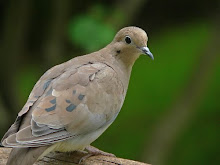
On gloomy Saturday mornings, sitting by my window with a hot cup of chocolate and my camera, it all became worth while. My yard was alive with song and color--red cardinals, gray-blue jays, taupe mourning doves, black and white woodpeckers, and native sparrows in every shade of brown and gray.

It’s fascinating just to sit and watch the birds interact. Some are bullies and some are pacifists, some silly and some sly. The blue jays can be heard long before they arrive. Loud and assertive they scatter smaller birds when they fly screaming into the yard. Cardinals, on the other hand, take flight at the least sign of danger-- real or imagined. A blowing leaf can send a group of timid cardinals into terrified flight. The red bellied woodpecker is a pretty laid back bird, not aggressive, but no birds get too close to him either. Since he spends his life hammering on wood, I expect a peck from him would seriously hurt another bird. He probably sees himself as the Rambo of birds, not looking for trouble, but not running from it.

Three Downey woodpeckers spent their days busily flying from one suet feeder to another. They were the first to find my homemade peanut butter/cornmeal mix and they seemed to like it better than the Kaytee brand suet I buy. One female Downey hates the other female. Her ambition in life is to drive the second female far, far away. She sits high up and watches for her rival and then swoops down and drives Number 2 from the suet feeder. Could this be jealousy over the one loan male? What’s that old country song “Your Not Woman Enough to Take My Man”?

The hairy woodpeckers and the red bellies weren’t as impressed by my homemade peanut butter concoction; they are loyal consumers of the Kaytee brand.

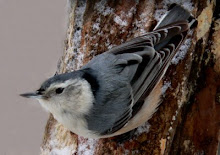
The little nuthatches are a delight. They are into every nook and cranny, even landing close to the windows and peering in at me. They grab a seed or a beak-full of suet and fly off somewhere to hide their treat for later enjoyment. Wonder how many sunflower seeds they have stashed under my shingles?

The chickadees have to be one of my favorites. They are never still. High energy, curious, bold. They flit from feeder to branch with their prize and hammer the seed open with tiny beaks while holding it with tiny toes. Chicka-dee-dee-dee they call constantly. I can’t watch these obviously happy little birds and not smile.

The starlings are tough guys form the hood. They come in gangs and intimidate with sharp stiletto beaks and their comparatively larger size. They aren’t my favorite birds but they get fed with the others. Flocks of starlings do a good job of insect patrol on my yard in the summer. From a distance they are a singularly ugly bird but up close they have an interesting coloration.

Looking back, it was a very long winter here, but signs of spring are beginning to appear. The trees have a green haze of tiny leaves. Plants are slowly waking up. The daffodils and forsythia are blooming just a couple weeks later than usual. Often gardeners have annuals planted by May first--not this year.

Winter bird visitors to my feeders: Cardinals, White Breasted Nuthatches, Blue Jays, American Tree Sparrows, Fox Sparrows, White-crowned
Sparrows, White-throated Sparrows, English Sparrows, Hairy Woodpeckers, Downey Woodpeckers, Red Bellied Woodpeckers, Black-capped Chickadees, Gold Finches, House Finches, Cow Birds, Juncos, Red Polls, Mourning Doves, Starlings, and one Red Tailed Hawk.


The birds of summer are returning now. More later.