Monday, April 13, 2009

Dancing with the dogs


My sister called me Friday with a sad story. An acquaintance of hers had died and left Cloe, his German Shepherd homeless. A local shelter had the dog temporarily. Would I take her?

I certainly would have loved to. She is a handsome animal. I called the shelter and talked with them about her.

"How is she with cats?" was one of my first questions.

Long pause. "She is good with other dogs but aggressive toward cats," was the answer.

It wasn't meant to be. If I wasn't away all day every day, we could have worked through her problem with cats. With me gone so much, a large aggressive dog simply could not be trusted not to somehow hurt a kitty.

I called the shelter today and she has a home, I hope it's a good one.

~~~~~~~~~~~~~~~~~~~~~~~~~~~


While we're on the subject of dogs... This is a You Tube clip from the British talent search program, Britain's Got Talent. Dog Geek, this BC looks like your B all grown up.

See what wonderful dogs Border Collies can be when they are not bent on destruction. Really, if you have a Border Collie you must have an endless amount of time to devote to them. They just don't do well left to their own devices but they do amazingly well when they have a lot of supervision.

Enjoy the dance;)

Wednesday, April 8, 2009

Cats rule and dogs drool


You might remember me, I'm Toby the Tabby. Today I'm blogging about our dog, Aggie. Spring is coming and with spring comes terrible thunderstorms. Thunder and gunshots are the two things that make Aggie go insane. When she goes nuts, she changes into a creature of super strength and no brains. The Woman is already getting worried wondering what crazy thing Aggie might do when the first big storm hits.

In my opinion, Aggie is usually a very dull dog. She won't play with cats, she's such a sissy. One little claw prick and you'd think we stabbed her with a sword. We can't even sleep on top of her because when we stretch and stick our claws into her she jumps up and runs. But to give her credit, she never eats our food. The Woman says 'no' and she won't touch it. Pretty silly dog, huh? I'd eat her food if she didn't inhale it in three seconds flat. Aggie never gets on the furniture, never chews things, and she comes like a streak when the Woman calls her. In fact she has lots of silly tricks she does for the Woman. All symptoms of the brainwashed obedience of dogs. Dogs are so needy they will do anything for a pat on the head. When the Woman tells us cats 'no' we pretend we don't understand.


When the storms come and the Woman is home, Aggie slinks around after her in a most cowardly manner but she does maintain some self control. On the other hand, when the Woman is gone Aggie changes from a dull dog to a demon creature. She jumps through windows, she broke through a screen door. One time during her storm-insanity she knocked over a TV trying to get under the table. She actually gnawed/dug her way through a chain link fence (not under but through). People don't believe that until we show them the hole she made by spreading the links of the fence--like the jaws-of-life. The Woman had to replace the weather stripping on the garage door because crazy dog ripped it off trying to dig between the door and the cement drive. The Woman is sure the idiot dog will jump out of the second floor window sooner or later. Personally, I don't think a fifteen foot fall would hurt her. She goes through glass with never a cut so why would a little dropoff do her any harm?

The Woman finally found a big cage with bars that Aggie cannot bend. Poor, silly dog will be spending her days in the cage. I heard the Woman telling her there will be no jumping through windows anymore. We cats cannot understand why sounds change our usually dull dog into a Tasmanian Devil determined to do herself harm. Guess it all comes down to the superior intelligence of cats.

~~~~~~~~~~~~~~~


Meanwhile, I've been busy conducting scientific studies. I'm trying to find the purpose for all the stuff the Woman has laying around the house. Taking things apart is the best way to figure them out.


The Woman doesn't understand my scientific interest. She has lots of stuff but she isn't interested in learning what things are made of. I can't believe she has a leather purse and shoes she's never even tasted. She is only somewhat smarter than the dog. So far I've determined that these two things are not edible.

Monday, April 6, 2009

An infrequent visitor

Saturday was a pleasant day with sunny skies and temperatures in the mid 50's. There was a lot of work to do in the garden but distractions kept pulling me away from cutting old flower stalks and replacing mulch.


This little guy visited me last spring on his way farther north. Of course I can't be sure it was the same bird but it's actually a reasonable guess to think my maple tree is a landmark he navigates for every year. I dropped my spade and ran for the camera. For the next hour we played ring around the maple tree. He was just a little shy making it a point to always be on the opposite side of the tree trunk from my camera.

This is a yellow bellied sapsucker. I know, it sounds like a name some cartoon characters use to trade insults. We don't see them often in this area, they just pass through on their way from Panama and Mexico to the forests of far northern US states and Canada. This little woodpecker is considered a keystone bird, one whose existence is vital for other birds in the community. Bats, squirrels, porcupines, and many types of birds including warblers, hummingbirds, nuthatches, and other woodpeckers are among the throngs that will eat sap made available by the sapsuckers. Most of these animals will also eat the many insects that are attracted to the sap as well.

It is thought that ruby-throats, and possibly rufous hummingbirds time their springtime arrival in Canada to coincide with peak sapsucker activity, and that the northern limit of their breeding ranges is determined by the presence of this woodpecker.


The male sapsucker is an idea family man. He selects the breeding territory, chooses the nest site, and does most of the nest cavity excavation. He also shares equally in the incubation of the developing eggs and nestlings (even taking the entire night shift) and does most of the nest cleaning. He actually does the lion’s share of feeding the young. In fact, males are more apt to succeed at single parenting. If one parent dies while young are in the nest, the young are more likely to survive to fledging if raised by the father.

I've read that during migration they seldom stay in any area longer than 48-hours which is a good thing for my poor trees. In reality the holes they drill won't hurt a mature, healthy tree.

Later in the fall when the sapsuckers migrate south again the males and females are very modern. They take separate vacations, the females traveling farther south.


~~~~~~~~~~~~

After my visit with the woodpecker it was time to put away the tools and go inside to watch the Santa Anita Derby. I'm the worst when it comes to picking winners. I always go for the handsome ones and ignore their track records. It was a slow race but the finish was exciting when four horses made a strong run for the wire. My number 3 pick, Pioneer of the Nile, won and my number 1 pick finished dead last;)


(Photo from the Los Angeles Times. Click on the photo for the story.)

Wednesday, April 1, 2009

Ecologist of the year

Tuesday evening we attended the Sinnissippi Audubon annual meeting and banquet. This year my father received an award for his lifetime contributions to numerous ecological organizations. No one has worked more tirelessly to preserve natural places and bring a harmony between people, birds and wildlife. I'm so proud of all the achievements he's made and he stands as a example to everyone. One person can make a difference.

My Dad is 86 and blind now. Up until a few years ago he was active in many wildlife organizations, the Ornithological Society, the National Land Institute wetland restoration projects, river clean up projects, and was a frequent lecturer on creating habitat for birds, butterflies, and wildlife. He helped a lot of homeowners build safe havens in their own backyards where nature could coexist peacefully with people.

Well done, Dad.

Another keen observer of nature was Robert Frost. His poems about simple, rural life in America have always touched my heart. The following poem is one of my favorites and beautifully describes spring in the northern United States.


Two Tramps in Mud Time

The sun was warm but the wind was chill.
You know how it is with an April day
When the sun is out and the wind is still,
You're one month on in the middle of May.
But if you so much as dare to speak,
A cloud comes over the sunlit arch,
A wind comes off a frozen peak,
And you're two months back in the middle of March.

A bluebird comes tenderly up to alight
And turns to the wind to unruffle a plume,
His song so pitched as not to excite
A single flower as yet to bloom.
It is snowing a flake; and he half knew
Winter was only playing possum.
Except in color he isn't blue,
But he wouldn't advise a thing to blossom.

The water for which we may have to look
In summertime with a witching wand,
In every wheelrut's now a brook,
In every print of a hoof a pond.
Be glad of water, but don't forget
The lurking frost in the earth beneath
That will steal forth after the sun is set
And show on the water its crystal teeth.


Monday, March 30, 2009

Spring isn't here yet

Red sky at night
Sailor's delight


Maybe that old rhyme is true on the high seas but not on the prairies of northern Illinois. Friday evening the sky was a deep crimson but instead of foretelling a pleasant day ahead it turned out to be a portent of snow. Saturday morning was leaden and by afternoon gusty winds blew in freezing rain. Temperatures dropped and the rain turned to snow.

Our local weather-prophets-of-doom had predicted nine inches. Happily it turned out to be much less.

Plants know how fickle nature can be.


These daylilies don't mind a little snow, nor do these bulbs recently risen from their winter beds.


This loan oak leaf escaped being buried under the snow and skittered and twirled with the wind gusts.


The viburnum fruit still clings stubbornly providing a bright spot of color through these drab winter days.


One tiny ice cycle


Already predictions of more snow Thursday. Winter isn't through here on the prairies.

As irritating as we find these late snows, it is nothing compared to the battle raging farther west in North Dakota and Minnesota. My heart goes out to those folks fighting to save their homes and towns. Hats off to all the volunteers traveling from all over the country to help. Everyone wishes you luck.


The Flood

At once the rain in torrents fell-
Heaven's windows all were open-
Like fiend escaped the bounds of hell,
Rushed on - the spell was broken.

Like chaff before a mighty wind
Down went each cottage dwelling,
Respecting none, the waves swept on,
Grim death before - a sea behind
Still high and higher swelling.

Day had dawned at last, oh, direful scene,
Night's fading folds uncover-
As dawns the day, far, far away,
Where late were valleys robed in green,
Dark waves are sweeping over..

~ Scott Cummins


Thursday, March 26, 2009

More garden folklore

Gardeners have always planted extra seed because they know some will not sprout. Poems or songs were tools to teach children how to grow seeds and how to count.

One for the cutworm
One for the crow
One to rot and one to grow.

Plant squash in May they run away.
Plant squash in June there will be plenty soon.

Plant pumpkins on the first of June,
You will have pumpkins soon.

Plant cucumbers on the sixth of July,
You will have cucumbers wet or dry.


Predicting the weather in rhyme helped them remember

Rainbow in the morning, farmer take warning
Rainbow at night, fisherman's delight.

A pale moon doth rain,
A red moon doth blow


If a redbird calls pretty, pretty, pretty,
The weather will be pretty.


(Photo courtesy of NASA)


Planting by the phase of the moon is a practice that is centuries old.
Many farmers and gardeners feel it is very important to work in harmony with the moon. Scientists actually studied these ancient methods and came up with some interesting ideas. During the dark phases of the moon, plants orient themselves toward their roots. With the sap rushing downward, it is said to be a favorable time for planting root crops and for transplanting. During the light phases of the moon, sap is said to flow upward, filling stems and leaves and favoring the planting of crops that mature above the ground.Another theory is that the gravitational pull of the moon raises ground-water the same way it does tidewater. If this is true, it suggests how the moon might pull soluble nutrients upward toward the roots of a plant and stimulate growth.

The next full moon is April 9, commonly called the Pink Moon named for the grass pink or wild ground phlox which is one of the earliest widespread flowers of the spring. Other names are the Full Sprouting Grass Moon, the Egg Moon, and -- among coastal tribes -- the Full Fish Moon, because this is when the shad came upstream to spawn. This is also the Paschal Full Moon; the first full Moon of the spring season. The first Sunday following the Paschal Moon is Easter Sunday which is observed on April 12 this year.

New moon March 26
First Quarter April 2
Full Moon April 9
Last Quarter April 17
New Moon April 24

Sow seeds during the waxing moon.
Plant root vegetables (carrots, onions, potatoes) during the third quarter of the waning moon.
Plant vegetables that grow above ground (tomatoes, lettuce, squash) two nights before the new moon or in the first quarter of the new moon.
Transplant on the waning moon.
Put down manure at the dark of the moon in March

If you can find a pregnant woman to plant your garden, everything will thrive.

A very important piece of advise if you find yourself in a drought (Folklore from Adam County IL an oral history)

"My husband went blackberrying day before yesterday and found a tick, and he said, 'We need a rain.' If you find a woodtick, stick a pin through it and stick it on the side of a wall or tree and it will rain in twenty-four hours. So he stuck a pin through it and stuck it on a maple tree, and we had a pour-down of rain before twenty-four hours."

Monday, March 23, 2009

Gardening to return to a healthier life

America is facing crisis on several fronts. Our economy is spiraling downward with no bottom in sight. Many people have lost their jobs or are fearful they will. We're all cutting back financially and saving for the bad news we expect is coming.

And if there wasn't already enough stress in our lives, in the last few years there have been numerous outbreaks of illness and sometimes deaths resulting from the unsafe growing and handling of commercial foods. Add to this the likelihood of poison residue on vegetables and in the water and soil. No wonder many of us are left doubting our country's food supply.

The perfect time for the nations First Lady to reintroduce an idea that was popular during other times of crisis in this country. Growing our own vegetables and fruits. Victory Gardens.

In 1943 Eleanor Roosevelt encouraged a return to the “victory gardens” that had become popular during the first world war when the country faced food shortages. Mrs Roosevelt planted a garden at the White House and some 20-million Americans followed her lead, By the end of the war individual gardens grew 40% of the nation’s vegetables. After the war in 1946 people abruptly stopped planting and the commercial growing of vegetables exploded.


Now we have Mrs Obama suggesting we go back to home gardens to save money and to live healthier lives. We have the president of Burpee Seed telling us a $70 investment in seed will reap a $600 reward in produce. I hope this idea is taking root in the minds of a lot of Americans. The message is clear, we can learn to garden, we can eat better and we can eat safer. I also hope the White House gardening staff sets a great example for us all by using safe organic methods of growing food.

I'm not sure what the First Lady and her friends are doing in the photo above. It looks like they are raking thatch but that can't be right. Mrs. O, you need gloves and better boots. You'll have blisters tonight. Do you suppose the fellows in white coats are from the White House Kitchens? Well, whatever they're doing, they look like they're having a good time. I plan to follow Mrs Obama's lead and plant more produce in my garden this year.

Thursday, March 19, 2009

Linum and some old folklore about gardening


Tuesday's 75-degree temperature broke records in northern Illinois. What a fabulous early spring day! I was able to spend a little time outside in the late afternoon. Pulling back leaf mulch on the sunny side of my stone wall I found daffodil bulbs already emerging. Also did some surveying for two spots to move a couple heirloom Gallica roses that aren't happy in their old location. Not looking forward to moving these.

I'm really enjoying doing the research on new additions to my garden this spring. This has become my year for experimenting with new plants. I ordered a package of Linum perenne or blue flax shown below from Swallowtail Seeds. Here is what I learned mostly from Tracy DiSabato-Aust's (aka the Queen of Deadheading;) and author of The Well Tended Perennial Garden.

(Texas A & M photo)


Three gardeners have highly recommended linum to me going so far as to say it's one of their favorites. Saphyr is 12-20 inches tall and blooms for several weeks in late spring/early summer then again in September. It is tolerant of heat and drought so it should be a good fit in my garden. It will probably be a short lived perennial but a good reseeder. I like an informal, cottagy style garden so this will be perfect adding a dash of cool blue here and there without adding a lot of bulk.

Tracy says cut cut back by about half in May to create bushier, studier plants. After bloom sheer off half to two thirds. Keep watered as they reestablish new foliage.

If you've grown linum, please let me know the pros and cons you found with it.

It looks like my plans to grow Tithonia Fiesta Del Sol may not work out. TC informs me that the Japanese beetles love the blooms and leaves. I'll try one or two but no point in feeding the darn beetles.

(Swallowtail Seeds Photo)


On to a completely unrelated topic. My Harbin and Cowden ancestors came from Ireland and Scotland and settled in the mountains of Virginia, West Virginia and the Carolinas. Most settlers brought with them some ideas about farming and growing things that today we consider somewhat odd. I can understand their desperate desire for crops to grow well, after all their very lives depended on it. What I can't understand is what made them think these particular methods of witchcraft and tough love might work.

According to Appalachian folklore here are some remedies for common garden problems. (By the way, these were not passed to me from my family but are just folk lore I researched. If all else fails in your garden, try them;)

Orchards

Eat sugar before planting fruit trees to make the fruit sweeter.

Apples with red spots inside means that the tree's root grew into the body of a murdered person. (This one creeps me out.)

Drive a rusty nail on the north side of the fruit tree for better yields.

The number of seeds in an apple will be your lucky number.

Whip a poor yielding tree and it will bear better the next year. (This one is pretty creepy too.)

Vegetables

Don't thank a person who gives you seeds or roots, or the plants will never grow. (I heard this from my Grandmother. )

Plant potatoes at night so the eyes don't see light.

Planting peppers when you are mad makes the peppers grow hotter.

For a good crop of watermelons, crawl to the patch backwards on the first day of May.

Since Good Friday is the only day when the devil has no power, plant as much as possible on that day. When planting on other days, plant two seeds for the devil and one for yourself.

Avoiding Bad Luck

To turn away negative forces of human, spectral or animal nature, toss nine broom straws, one at a time, on a hearth fire at sunset. ( I wonder if this would get rid of squirrels, moles, rabbits or bad neighbors;)

Dried basil hung over the doorways, windows, & fireplaces will keep unwelcome visitors (human or spirits) from entering. Rue or Purslane planted near the house discourages unwelcome visitors.

Placing a fern or ivy on the porch will protect against bad luck.

Geranium petals will protect you from lighting strikes and snakebites.

Geraniums on the southwest edge of your land can also provide protection against storms.

And last but not least, if you refuse to heed the weatherman and garden during thunderstorms, carry pieces of wood from a lightening-struck tree to protect yourself.


All kidding aside, I've met a few modern day rose growers that practice a similar blend of witchcraft and high tech chemistry. But that's a story for another blog.

Have a great weekend.

Monday, March 16, 2009

Mexican Sunflowers, non stop bloom and a butterfly magnet

Another annual I'm excited about trying this year.

(Fiesta del Sol from Park Seeds)

The Mexican sunflower or Tithonia is a plant I've tried to grow for years with limited success. It isn't really a difficult plant needing very little water, average soil, and thriving in heat and humidity. In my garden I always grew the tall 4-6 foot variety Torch. Just as the plant began its spectacular bloom display a summer thunderstorm would blow in and snap the brittle stems in a dozen places. The rest of the summer I'd be left with misshapen, stubby plants that continued bloom but lost stems in every wind.

This year I' m hopeful again. There are a couple smaller varieties on the market that are under 3-feet in height. Fiesta Del Sol the AAS award winning dwarf vaieity produces heavily from mid summer till frost on 28-inch plants. There aren't many flowers Monarch butterflies love more than Tithonia. If that isn't reason enough to try it, deer and insects do not like it, and it isn't bothered by disease. One of those rare win-win situations in the garden world.

I wish my garden had an area sheltered from high winds. Tithonia Torch would make an impressive spectical grouped. I had tried to grow it in a group of three as a screen but the entire group ended up a lopsided mess of broken branches.

It was easy to find seeds locally for both the dwarf and the taller vaireties. I'm really looking forward to trying Fiesta Del Sol. Tithonia doesn't tolerate frost and isn't fond of cool springs. It thrives in full sun and hot summers.


Happy St. Patrick's Day to everyone. May you each find that rainbow that leads you to a pot of gold.

Wednesday, March 11, 2009

A book review of A Year on Lady Bug Farm

For the past four days I've been sick in bed feeling very sorry for myself. About the only thing I did manage to do was read. Today I'm much better, back at work and hoping to visit my favorite blogs. I've missed you all.

A Year on Lady Bug Farm was a light hearted ( and light weight) novel with a subject I'm very familiar with. Purchasing, renovating and living in a hundred year old farm house.

The first 50-pages were slow going but after that the book was very entertaining. Below is a quote from the back cover of the book.


Their husbands were gone, their families were grown, and the future stretched out before them like an unfulfilled promise... Tired of always dreaming and never doing, Cici, Lindsay, and Bridget make a life-altering decision. Uprooting themselves from their comfortable lives in the suburbs, the three friends buy a run-down mansion, nestled in the picturesque Shenandoah Valley. They christen their new home "Ladybug Farm," hoping that the name will bring them luck. As the friends take on a home improvement challenge of epic proportions, they encounter disaster after disaster, from renegade sheep and garden thieves to a seemingly ghostly inhabitant. Over the course of a year, overwhelming obstacles make the three women question their decision, but they ultimately learn that sometimes the best things can happen when everything goes wrong...

Thursday, March 5, 2009

A birdseed garden


Last year a bumper crop of sunflowers sprouted from seed I hadn't sown. Mostly they came from the black oil or striped sunflower seeds the birds dropped or scattered the previous winter. I enjoyed the blooms so much, I decided to add some different shapes and colors this spring.

Nothing could be easier than sunflowers as proven by the outstanding plants the birds grew. Really, if birds can grow sunflowers, anyone can. I remember a few years ago sunflowers were growing in the soybean fields around me (again courtesy of the birds). It was quite a site, this sea of beans with the occasional sunflower sticking up several feet taller;) The farmer who leased that field wasn't as aggressive with herbicides as the current one.

Sunflowers are somewhat drought tolerant which appeals to me. It's pretty much a plant 'em and forget 'em style. Sometimes the very tall ones lean to the point they need staking but the shorter ones stand up pretty well on their own. Sunflowers are tender annuals so they won't tolerate cold weather. I wait until the soil warms and there is no chance of frost before planting them outside. (The birds haven't read that rule and their sunflowers grow anyway;)

The bees love sunflowers, unless you get one of the pollen free hybrids. Later in the summer the goldfinches perch on the dried blooms trying to find the first ripe seeds.

This spring I'm sure the birds will plant another garden of sunflower. I'll leave most of them to grow and bloom. I hope they like these new hybrids I have chosen.


I chose a mix of seeds like this (from Park Seeds - Van Gogh Mix). Blooms are singles and doubles from 5 to 10 inches in across. These plants are all around 5-feet tall so they will give height to the garden.


These Jewel Toned red, gold and bronze are from Parks Seed also. The plants are 6 to 10 feet tall so stake them well or they may fall.


If you haven't a good spot for the tall ones, Parks Solar Babies Mix is only one to two feet tall.


With any of these sunflowers , succession-plant every two weeks to enjoy blooms over a long period.


A note for anyone interested in wild birds. Monday afternoon I found a Goldfinch sitting on the lane into my farm. It appeared to be stunned altho I don't know why or how. It allowed me to pick it up and only struggled weakly as I held it.

I carried it home and put it into an old bird cage with plenty of food and water. It remained huddled on the cage floor for about 3 hours never moving. I didn't expect it to survive the night but thought at least it would be warm (outside temperature in the teens).

It relaxed a little as time passed and finally put its head under a wing and seemed to be sleeping. The following morning it was quiet but alive. That afternoon it was more active.

I'm hopeful it will recover but now I have a problem. It is illegal for me to have this bird. In fact I was breaking the law by even picking it up. I hope to find a licensed rehabber to keep it for a while. It's impossible for me to diagnose it, it may not be able to fly or have some injury. I think setting it free would be a mistake.

If anyone else has had a similar experience, please let me know your solution.

Friday, February 27, 2009

BUNNY TAIL GRASS

Another new annual for me this year will be Bunny Tail grass aka Lagurus ovatus. Again, I love the common name, very descriptive and charming.

This grass forms low growing (under 24-inch) , rounded clumps. It self seeds but is not invasive. The flowers produced July through September are remarkably like the white tails of little rabbits. This is a hardy annual so sow outdoors about 3 weeks before last average frost date or in late summer. Indoors 6-8 weeks before last frost.

I think this will make a very charming and unusual addition to my perennial borders. Sharon at Garden Web plants Bunny Tails as fillers in pots. See her lovely photo here.


Photo left from the University of Illinois extension. They advise planting in full sun, drought tolerant. Roots rot in damp soil.


Like my previous post on Love in a Mist, Bunny Tail flowers are very useful in fall and winter dried arrangements. Crafters take note, these would be so cute on wreaths.


Photo right from Chiltern Seeds. Chiltern has a dwarf form growing only 8-inches tall. It would be perfect for the front of a sunny border. If I hadn't already bought the taller variety, I'd try this one.


Here is a seed packet from Botanical Interests. They say "Fun for kids, wonderful for flower arrangements. Adds a touch of whimsy and texture to the garden. Dried foliage is attractive in winter. Winner of the Quality Mark Award from Fleuroselect in 1993.


Love in a mist


I decided to post about some of the new plants I plan to add to my garden this year. By new I mean new for me. Hope anyone who has grown these plants will leave a comment with any tips you might have.

(Image at left from Thompson-Morgan Seeds)

This post will be about the annual Love in a Mist which also goes by the much less romantic name Nigella damascena. Isn't Love in a Mist a romantic name. So many of the old English names are wonderfully descriptive. Names like Love In A Mist, Bleeding Heart, Johnny Jump Up, Morning Glory, Sweet William. They usually describe the plant's best features. The botanical name Nigella means 'black seed'. (How very picturesque are botanical names:(

Anyway my research tells me this aptly named flower lends an airy gracefulness to the garden. It produces misty pastel blooms surrounded by a web of thready bracts. The blooms age into interesting seed pods good for winter arrangements. Direct sow in a sunny spot where the plants will grow because they resent transplanting. They are drought tolerant which is an excellent recommendation. Don't plant them in an area that stays damp. Since future generations self sow I should continue to enjoy these for years. Love in a Mist does not like the heat of late summer and will probably stop blooming sometime in late July.

(Photo courtesy the British Botanical Gardens)


Tina at IN THE GARDEN was kind enough to share seeds with me. (Thank you Tina.) She says Love in a Mist is a favorite of hers and very easy to grow from seed. Click on the link to view seedlings in Tina's garden. This is a hardy annual which may sprout from self sown seed in late summer or early fall. The young plants tolerate the winter conditions and have a head start the following spring.

If you need a little more enabling, please take a look at this photo from


This photo of a seed packet shows the various colors.

I'm really looking forward to photographing these blooms. They have such an ethereal appearance.

Please let me know if you've grown these. I'd love to hear anything you have to say about them.

Wednesday, February 25, 2009

Alfalfa an effective organic fertilizer

Many years ago I read an article published by a commercial hosta grower. This grower had been part of a study researching the use of alfalfa applied to plants, primarily in the form of a tea. The results of the study were amazing. Plants fertilized with a dilute alfalfa tea were dramatically larger (by weight).

Of course I found this intriguing so I began to search for more data. It seemed that rose growers had been using it for years too and enjoying success in the form of more basal breaks and increased flower production.

Alfalfa meal ( N: 3 P: 2 K: 2 ) contains many useful trace elements but the main reason it is so effective is triacontanol, a growth stimulant. Triacontanol is the substance responsible for larger and faster developing plants. Not to change the subject but if growth stimulants sound awfully familiar to you, there are a lot of different kinds in the news recently. Alex Rodriguez just admitted his success as an athlete was due to taking muscle growth stimulants. President Obama is thinking money is the best growth stimulant and is planning to test that theory on our ailing economy. And of course men are still hoping for a hair growth stimulant.

Baseball, hair and the economy aside, I've used alfalfa for years in my garden and have been very pleased with the results. I broadcast alfalfa meal or pellets over the entire garden in April, June and September. I also apply it in the form of tea to individual plants twice per month. Here is the recipe I use to brew tea. I fill a very sturdy thirty-five gallon trash can with water and add ten to twelve cups of alfalfa pellets or alfalfa meal. (On a smaller scale, start with a 5-gallon bucket of water and add one or two cups of alfalfa meal.) Let steep for three to seven days stirring frequently. Allow to settle and dip out the tea applying one to three gallons on individual plants. The remaining sludge can be applied directly to the garden or left in the trash can and more water added. Be warned, the longer I allow the tea to steep the more odor it gives off. After a week in hot weather the tea has a definite odor of decomposing vegetation. It's fairly easy for me to ignore the smell because I've also made horse manure teas which are much stinkier altho very effective.

I have considered the discussion about folier application of organic teas. It may be beneficial but it does leave a cloudy residue on leaves. Some people add other organic concoctions such as fish meal, Milorganite, compost, coffee grounds, cotton seed meal, etc to the alfalfa tea. Be careful if you add things. While weak organic teas almost never cause burning in plants the addition of other substances could.

My theory on the use of organic teas and fertilizers is as follows: First I don't worry about the harmful chemicals and salts left in the soil and in our water supply. No concern about fertilizer run off polluting rivers and lakes. No chance of over fertilization burning or killing plants. Less plant disease caused by the stress of commercial fertilizer. Decreased need for excess watering. Most important, my cats, dogs and visitors can walk anywhere in my garden and not worry about poisonous chemical fertilizers.


I buy alfalfa meal at my local feed dealer. It's only about $10 for 50-pounds if bought as horse feed (be sure no salt has been added). Smaller quantities are now sold in garden shops but they are more expensive. The meal form looks better applied directly to the garden. Pellets work as well but after the first rain they don't look very attractive.

(Alfalfa meal looks very natural when spread over the garden)

I begin application in early April so it has time to decompose and give plants that necessary boost they need to get off to a good start.

Monday, February 23, 2009


Spent the weekend digging out from under another six inches of snow. Winter weary northerners shoveled driveways, searched for buried cars, and negotiated icy roads. This morning we woke up to a zero degree temperature reading and another struggle to don heavy coats, woolen scarves, fleece lined boots and insulated gloves. Walking from house to car is the equivalent of a ten minute workout with weights.

It will be April before we see signs of spring in northern Illinois. Not early April, that's when we usually get one of our heaviest snowfalls. By mid April temperatures will moderate and the rains will begin. Spring will be here in April.

My featured guest blogger:


Hello everyone, I'm Toby. You may recognize me from previous blogs. This is my reward for being a good cat all week. I wasn't perfect, She tells me, but I'm much better. Yesterday for instance this idea of tearing up a magazine just popped into my head. She took away the magazine and told me that wasn't allowed. I saw Her put the magazine on the counter but did I grab it the minute Her back was turned? No, I tried to make a good impression.

There are so many rules. No walking on the counters, no jumping on the tables, no eating the dried flowers, no chewing on shoe laces, and on and on... Who could remember all those rules?

Somehow She knows what I've done even if She didn't see me do it. How does She know? I have to give that some thought. There must be a way to make Her believe it was one of the old cats or maybe that silly dog.

I remember where that magazine is.


Thursday, February 19, 2009

Counting birds and a very naughty cat

Last weekend Cornell University encouraged everyone to count the birds in their back yard. The information gives researchers a 'picture' of the number of birds of each species and where they are. Here are a few of the birds that were counted in my yard.

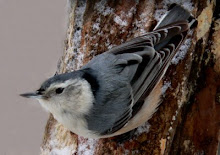
A white breasted nuthatch.


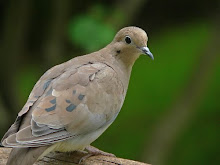
A mourning dove. Don't they look like they are wearing blue eye shadow?


A colorful collection of redpolls and gold finches.


A handsome house finch.

I also counted cardinals, blue jays, tree sparrows, dark eyed juncos, several downey woodpeckers, a hairy woodpecker, a red bellied woodpecker, a starling, and many little chickadees.


Now for something non-bird related.

This is the poster boy for Bad Catitude, Toby the Terrible Tabby.


And this is his work.


My oh-so-warm and comfy slippers.

Why in the world did he decide to de-wool them?

Nothing is safe from this devious little wrecking machine;)


Is this the face of a cat who is sorry? No, he looks kind of smug to me.


Tuesday, February 17, 2009

An other kind of cherry and another kind of search engine

First of all, something that will probably interest gardeners. Mr Brown Thumb has tweaked the Google search engine to give us gardeners better search results. For anyone who gets frustrated because commercial sites hog all Google's resources, try this simple alternative. I've used it several times and was please it gave me many alternatives to my searches using the basic Google engine. My Brown Thumb personally reviewed gardening sites and ranked them based on useful information about plants and other related topics. Google for Gardeners can be found by clicking the link.

I added Google for Gardeners to my Google home page by clicking on 'add stuff'' on the upper right of the Google page. When the 'add gadget' page appeared I typed the word gardeners into the search box.

Thank you Mr Brown Thumb for giving us this tool to expand our knowledge and become better gardeners;)

~~~~~~~~~~~~~~~

My second topic is about some research on new plants I plan to add to my garden this spring.

Recently I went to a seminar on gardening in my area. One of our TV weathermen, who lectures on bee keeping and gardening, was talking about his recent gardening experiences. Somehow the conversation turned to ground cherries. He told me he loves ground cherry pie and I admitted although I remember hearing about them, I'd never eaten the fruit.

After doing a little research, I decided to add them to my garden next spring.

If you're not familiar with ground cherries or cape gooseberries (
Physalis peruviana), this is what I learned. They are a member of the nightshade family along with tomatoes and peppers. In appearance they look much like their close relative the decorative Chinese lantern (Physalis alkekengi). The fruit is firm with a refreshing flavor sometimes likened to a combination of strawberries, pineapples and tomatoes. The plants are 1-3 feet in height and more upright than a tomato plant. They are grown as annuals in the colder northern zones and perennials in warmer areas.


Usually started from seed they grow and bloom quickly. Once they begin blooming they continue until frost so you will have a long season of fruiting. They require full sun and aren't particular about soil. Keep watered during development and then cut back on water as the fruit matures. You can judge the ripeness as the husk turns brown. Many people wait until the fruit falls from the bush judging this to be the perfect stage for eating. Just remember the birds will be watching too so don't leave them out there very long;)

Ground cherries can be a little bland when eaten raw but make excellent additions to salads, salsa, jams and jellies, and are most often treated like other fruits in pies, cakes and muffins. It is reported this fruit was a favorite of the Amish and Mennonites and I found many of their recipes for ground cherry pie.

Searching google I collected dozens of recipes including cupcakes and
tiny pies in muffin tins,
fruit drinks, custard, and turnovers.


(Photo courtesy Veseys who sells seed)


A simple Amish recipe for pie.

  • 2-1/2 cups ground cherries
  • 1/2 cup packed brown sugar
  • 1 tablespoon all-purpose flour
  • 2 tablespoons water
  • 1 (9 inch) pie shell
  • 3 tablespoons all-purpose flour
  • 3 tablespoons white sugar
  • 2 tablespoons butter

Preheat oven to 425 degrees F (220 degrees C).
Wash ground cherries and place in unbaked pie shell. Mix brown sugar and 1 tablespoon flour and sprinkle over cherries. Sprinkle water over top. Mix together 3 tablespoons flour and 3 tablespoons sugar. Cut butter in until crumbly. Top cherry mixture with crumbs.
Bake in the preheated oven for 15 minutes, reduce temperature to 375 degrees F (190 degrees C) and continue to bake for 25 minutes until crumbs are golden brown.


Reimer Seeds has seed for sale as does Solan Seeds and Veseys who also have yummy pie recipes. Remember the leaves and stems of the plant may be poisonous. Be careful, especially if you are starting seeds inside (8-weeks before last expected frost). You wouldn't want a child or kitty munching on the seedlings.