I will be resuming twice weekly publishing starting today. I will try to maintain a Monday and Thursday schedule of posts.
I want to thank everyone who stops by even when plants in the garden are scarce. I can't tell you how much your comments and advice are enjoyed and appreciated. You have become very good friends over the seasons and I treasurer the time we spend sharing stories and photos.
Really looking forward to this season in the garden. Hoping for good weather and plenty of rain.
******
Tulip season is winding down. First the little species tulips bloomed with the daffodils. Next came the parrots and now the late doubles.
Late doubles are first.
Allegretto is a fire storm of color. This is one of those 55 mph tulips, as Brent and Becky's call them, a real standout. It was the last tulip to bloom so it may have a week or more before it's finished.
Toning down a few shades is Foxtrot a multi hued pink double.
And last, everyone's favorite late blooming double, the lovely Angelique. Angelique has been extremely long lived here. Every year I breath a sigh of relief when I see her foliage emerge and know she has come back once again.
Now the flamboyant parrot tulips. Below is Libretto, very similar to Madonna (Madonna can be seen on my header and in the previous post) but with a much less dramatic green flame. Libertto blooms about two weeks later than Madonna in my garden.
Opening wide during the day to allow the pollinators access and closing back in the evening.
This is Carmine, outrageously beautiful.
Now for a few blooms from the shade and woodland gardens.
I'm smitten with lamium Pink Pearl. The pearly silver and green leaves almost glow in a shady spot. It's a quick spreader so I'll be dividing and moving this clump around very soon.
These are Virginia blue bells and I can see a couple leaves of garlic mustard among them. How embarrassing, we all have weeds but we don't usually show them off! Garlic mustard is the bane of my existence. Hope you never get this evil weed in or around your property.
Saving the best for last. Isn't this just the loveliest and most romantic of plants. My father has two varieties, one like this and a more or less ever blooming cultivar. The ever bloomer does not have quite the perfectly defined heart shape and the color is pale but the foliage is ferny and very attractive.
Last weekend's sun rises behind promising clouds but the promise never materializes. The clouds burn off later in the day and we still have no rain. The ground is very dry and the wind is constant. My woodland garden is quietly suffering.
Still hopeful that some rain my drift our way by week's end.
Anyone who says sunshine brings happiness has never danced in the rain.
~Author Unknown
The celandine poppies are beginning to bloom. To think, once not long ago, I did not like these plants.
Confederate violets are more persistent than the common lawn violets. To have one today is to have several hundred in a few years.
Couldn't resist these fringe tulips when I stopped at Didier's. Don't look too closely or the fringe begins to look like sharp white teeth.
Virginia blue bells blooming in a little pool of anemone.
Anemone is another plant I never cared much for until recently. It seemed so bland. Now I can't grow enough of it. My ideas about flowers and gardens have changed drastically over the years.
A large spot of whimsy I pass on the way to visit my father at the therapy center. This 15-foot tall tree has been completely uprooted and 'planted' upside down with the roots making a large nest at the top. It is decorated with bright spring colors.
The Resident Rodent Remover is on the job. Wearing his fearsome expression, doesn't he remind you of Clint Eastwood? No need to worry about moles, voles or gophers in his gardens.
An interesting bit of trivia. Last month was the warmest March in history, globally.
Our temperatures are still way above average. Eighties today and tomorrow before a cold front comes through and brings rain and cooler weather.
I took photos of my spring bulbs last night. These eighty degree days may spell an end to the bulb season. Fingers crossed that the cooler weather on Friday will rescue some of them.
My favorite Parrot Tulip came back--second year in a row. The color combination is fantastic.
These very short yellow and red tulips are Kaufmanniana Guiseppe Verdi. Very short with some red striping in the foliage.
Another very short tulip is Greigii Orange Toronto only about 10 inches tall with very nice red striped foliage.
Unknown daffodil, little faces turned toward the sun. Love the bright colors.
This daffodil reminds me of eggs, the center looks like yellow yolks;) Very small blooms but ruffled and pretty.
Another of my Parrot Tulips.
Do any of you dig your tulip bulbs after the foliage dies back? I've heard some people have success doing this to keep the bulbs going from year to year. A little extra trouble, but I would do it for favorite varieties.
Wednesday, April 7, 2010
Though a country be sundered, hills and rivers endure; And spring comes green again to trees and grasses Where petals have been shed like tears And lonely birds have sung their grief. ~TuFu
A lovely week past with temperatures ranging from the 70's to a record breaking 80+. Overnight the bulbs shot up inches and these daffodils burst into bloom. Signs of spring are everywhere. The grass is greening and will need a first mowing soon (my least favorite summer chore.) The first toad of the season hopped across my path late Monday evening and was almost stepped on, accidentally of course. They seem to like to hang out in front of the garage so if I manage to miss them with the car wheels, I may stumble over one in the dark. At night I hear the lovely music of the frogs and during the day the birds are full of spring songs .
This year plants are about two weeks ahead of the season. I checked the posts from 2009 and the little group of daffodils pictured here bloomed April 20th.
Last weekend brought gentle rains and now midweek, we are having thunderstorms. Thunderstorms are another sure sign of spring but, an interesting note, we had thundersnow a couple times over the winter. Temperatures are expected to plunge, today's highs will be in the 40's with a possibility of a little snow tonight. As much as I enjoyed the warmer temperatures, my flowers will actually last much longer if the weather is cool. Tulips especially seem to blow in a day or two of 70 degree heat.
This forsythia is not mine but I wish it were, it certainly is lovely.
The geese are seeking solitude to nest and raise their young. I knew that geese mated for life but did not know that they stay in family groups (even in a large migratory flock family members will remain close to each other). If a goose gets injured and cannot keep up with the migratory flock, it will land, often with family members. These geese will stick with the injured one until it gets better or dies, and then join a new flock.
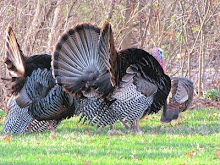
Turkeys on the other hand are polygamists and seduce as many ladies as they can.
Turkeys and geese nest on the ground and require abut 6 weeks to lay and hatch their eggs. During this time they are very vulnerable to predation. It's estimated that less than half of nestings result in live chicks. After that the mortality rate increases and only 20 or 30 percent of the chicks reach an age when they can fly.
These photos don't show the lovely iridescent colors of their feathers. Groups of wild turkeys are becoming quite common in this area. Hopefully some chicks will soon appear following close behind their mamas.
Now that the winter’s gone, the earth hath lost Her snow-white robes; and now no more the frost Candies the grass, or casts an icy cream Upon the silver lake or crystal stream: But the warm sun thaws the benumbed earth, And makes it tender; gives a sacred birth
**********************
Some of you may have seen this going around in emails. I got such a kick out of it I wanted to post it for anyone who hasn't seen it yet.
How much does a house weigh?
How much weight can a two lane rural bridge hold?
Is this covered by my homeowners or vehicle insurance?
Finally we have a week of beautiful weather. I tiptoe around the edges of the garden. I’m bent over, peering down, looking for signs of green, brushing away a little leaf mulch and then putting it carefully back. I have to time my garden activity perfectly. If mulch is raked away too early, it won’t protect the tender shoots from late frost, but if left too long, there could be injury to the new plants it protects. When the forsythia bloom is the general rule here. Cut back perennials, prune roses and remove mulch when the forsythia begin to flower. (Southern gardeners are probably wondering why anyone would try to garden in a place where the last spring frost date is May 15th:)
Every spring I regret not planting more very early bloomers like hellebore and crocus. It’s the high failure rate that always makes me hesitate. More often than not, early flowers are either buried under several inches of snow or ruined by hard freezes. The failure years always seem much harder than if I had nothing at all to anticipate.
I’m surprised to see how dry the upper layer of soil is. After the abundance of snow that just melted, I expected the ground to remain wet longer. Rain is predicted for this weekend and we really need it to give plants a good start.
The lamium leaves are limp but still hold that pretty green and white pattern. Lamium tries to be an evergreen, remaining leafed out all winter, protected by the snow. Strawberries too and heuchera keep their foliage. I’ve seen early daffodils blooming in other gardens but mine are way behind. Some of the distinctly striped species tulip foliage is showing--not much. I planted a dozen or more bulbs last fall and not nearly that number has emerged. Disappointing.
The pagoda dogwood leaf buds are swelling and the lilacs are just forming flower buds. Spring is always cautious in the north. In May the earth will explode, making up for time lost.
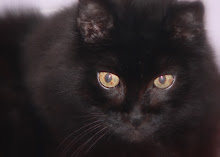
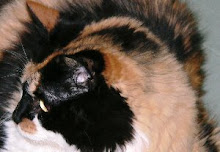
This is Hocus Pocus, the perfect friend to share a comfy chair or a pillow with while reading a good mystery.
Hocus and I recently spent a day reading The Crossing Places, a first novel by Elly Griffiths. Since my garden updates are so pitifully brief, we decided to include a book review. (Really, it was my decision, Hocus had no opinion either way. Another reason to love cats, they never argue:) My review follows.
Round the eastern coast of Norfolk, the North Sea creeps upon the land and leaves behind a desolate place known as the salt marsh; a landscape of oozing mud and deep pools hidden beneath rampant grass and reeds. Thousands of years ago, this hostile place may have held religious significance for primitive peoples. Upon it they built a wooden henge and set markers to navigate the quicksand beds.
Today, this lonely site is shunned by most, but Dr Ruth Galloway chooses to live here near where she first excavated the site of the ancient henge. Dr Galloway, archaeologist, anthropologist, and professor at Northern Norfolk University, views the salt marsh with a strange combination of fear and awe, love and loathing. Although the road to her cottage, one of only three houses on the marsh, is frequently flooded and impassible, she is determined to ignore these inconveniences and remain living with the history of the long ago people who dwelt here.
Her anthropology expertise makes her the logical person to consult when the shifting bog gives up the body of a child. Could this child be Lucy Downey, taken from her home ten years ago with never a trace or clue to her fate? The missing child has haunted Detective Chief Inspector Harry Nelson these long years. After the child went missing, the kidnapper taunted him with letters giving cryptic clues to Lucy’s final resting place. A brief examination by Dr Galloway results in the discovery of an Iron Age torc around the child’s neck and she determines this is not Lucy but rather an amazingly well
preserved corpse that dates to perhaps 600 BC.
Another crushing disappointment for DCI Nelson, but a career building discovery for Galloway. Still, the Inspector senses an ally in Ruth. Her ready knowledge of folklore and ancient myths may aid him in discovering clues in the letters written by the kidnapper (if they were indeed written by him and not some publicity seeker trying to gain attention from a high profile case). Thus, Ruth is drawn into the search for the long missing Lucy and her abductor.
Author Elly Griffiths creates a vivid picture of this desolate bog, a place of neither sea nor land that holds many secretes and must be coxed into revealing them. The British have a knack for writing dark and brooding atmosphere. I have a feeling that we Americans would look upon this place as a mostly sunny wetland full of wonderful birds and colorful plants, but that would not add to the sinister tone of the story. Instead, Griffiths paints us a landscape, lonely and unfriendly, dark and wet and always willing to
accept the sacrifices of man and hold them forever.
Ruth Galloway is an unusual main character. Neurotic, aging and overweight, struggling with a lot of anger and self worth issues, she isn’t at first a very likable heroine. We glimpse her thoughts and see mostly self absorption and repressed hostility. It was not Ruth’s character, but rather the romance of ancient legends that pulled me deeply into the story. DCI Nelson is a more compelling character. He is both intense and focused and the reader can’t help but sympathize with his frustration over his failure to resolve the
Lucy Downey case.
Familiar as we are here in America with police procedurals (we are bombarded by forensic shows such as CSI, NCIS and Law and Order) we may also wonder why the Norfolk police didn’t call in experts in the fields of mythology and religion to analyze the letters at the beginning of the abduction case rather than ten years later. All I can say is that most novels have these irritating flaws but if the author has already hooked her readers, minor problems can be overlooked.
For years I have been an avid reader of the novels of Beverly Connor and Kathy Reichs, both anthropologists. Elly Griffiths’ first novel The Crossing Place is different even though the theme is similar. Slower paced and featuring not the self assured professional women created by the first two authors, but rather a competent academic who is more comfortable with cats than police inspectors and who, every morning must deal with her own self image before she can face the challenges of the day.
This book lost points with me for the following reasons:
Animal cruelty. I know it’s just a book, but the cruelty was senseless.
Too much angst and self-absorption.
The ending was just too well tied up. All the puzzle pieces fell in place much too quickly and too perfectly.
I knew who the evil doer was from the beginning (but there were a few surprises in the red herrings Griffiths threw at us).
when the sun shines hot and the wind blows cold: when it is summer in the light, and winter in the shade. ~ Charles Dickens
Except for one little weather hiccup on the first day of spring, which brought a couple inches of snow, things are looking good here in northern Illinois. The snow was completely melted by the following day and the brutally cold wind of Saturday night had calmed to a pleasant breeze. On my way to Core Mariae to visit with my Dad, I saw my first big drift of daffodils covering a south facing bank along Spring Creek Road.
I took my camera with me Friday and got a few photos as I moved from place to place during the day.
A lovely sunrise greeted me as I drove down my little lane on the way to work. The ground fog sweeps along the low lying troughs like a frothy river.
This is the Kishwaukee River very near to where I work. Clouds building all day brought snow late that evening.
The Kishwaukee River views were taken using a new (new to me) type of photo editing called tone mapping. Both images are pseudo HDR from a single photo image.
Photographs have a limited dynamic range which is inadequate to reproduce the full range of light intensities present in nature and visible to the human eye. Tone mapping is one step in the HDR (high dynamic range) editing process. Tone mapped images have more luminescence and more of a three dimensional look. I know I'm not explaining this well but it's only because I don't understand it myself:) I'd like to thank Jennie at Views From My Camera for her advice on HDR photography. Thanks Jennie, this is fun!
St Patrick's Day parade. Photo courtesy of Rockford Register Star
Wishing you all a happy and green St Patrick's day.
My mother's maiden name was Brennan. Her great-great grandfather immigrated to the US from county Galway in the 1800's to work on the railroads. The Brennan clan has a colorful history reaching far back into Ireland's past. Songs are still sung about one famous (or infamous) Brennan in the late 1700's. A harsh time when England invoked cruel laws on the country and Ireland relinquished its parliament.
This is the legend of William Brennan, Ireland's Robin Hood. Willie was the son of a tenant farmer on the banks of the Blackwater who witnessed his family's eviction from their home. His mother was forced from her sick bed and soon after died. Brennan resolved to protect the poor from such tyranny and revenge his family for the terrible injustice (or so the legend goes).
He gathered around him other men with similar tragic stories and took to the hills to begin robbing the rich and helping the peasantry. He was much beloved by the locals because of his aversion to killing and his generous character.
Tis of a famous highwayman A story I will tell; His name was Willie Brennan, And in Ireland he did dwell; And on the Kilworth mountains He commenced his wild career, Where many a wealthy gentleman Before him shook with fear.
Brennan on the Moor, Brennan on the Moor. Bold, brave and undaunted Was young Brennan on the Moor.
A brace of loaded pistols He carried night and day; He never robbed a poor man Upon the king's highway; But what he'd taken from the rich, Like Turpin and Black Bess, He always did divide it With the widows in distress.
One day upon the highway, As Willie he went down, He met the Mayor of Cashel A mile outside the town: The Mayor he knew his features; "I think, young man," said he, "Your name is Willie Brennan; You must come along with me."
Now Brennan's wife had gone to town, Provisions for to buy, And when she saw her Willie, She began to weep and cry; He says, "Give me that tenpenny"; As soon as Willie spoke, She handed him a blunderbuss From underneath her cloak.
Then with his loaded blunderbuss, The truth I will enfold, He made the Mayor to tremble, And robbed him of his gold; One hundred pounds was offered For his apprehension there, So he with horse and saddle To the mountains did repair
Then Brennan being an outlaw Upon the mountains high, With cavalry and infantry To take him they did try; He laughed at them with scorn, Until at length, 'tis said, By a false-hearted young man He basely was betrayed.
We are finally snow free. Temperatures in the 50's, even reaching into the 60's on a few afternoons, have melted all but the monster piles of filthy snow in parking lots. Maybe the luck of the Irish will bring an early spring and keep those late season snow storms away. Wherever you are, hope it's sunny and warm and things are starting to green up in your gardens.
Do any of you remember that famous line Tommy Smothers used when he got into an on stage argument with his little brother Dick. This time of year I feel that way. Not about my mom or my brother and sister, but about Mother Nature and the gardeners in warmer climate zones. In the mornings, visiting my friend's blogs, I see photos of blooming crocus, daffodils, Lenten roses and sometimes annuals or even flowering trees. Looking out my own window I see snow and mud under a weeping sky the color of pewter.
In the northern states the daytime temperatures are getting into the 40's . The soil which is saturated from the melting snow turns to a quicksand like mire. Rural roads are closed to heavy vehicles because the underlying ground cannot support the weight and the pavement will crumble. When I kept horses here, I would walk behind the barns to fill the hay racks and my boots would be literally sucked from my feet. What a horrible sensation to stumble out of your boot and end up stocking footed in frigid mud two feet deep.
The deep snow is slowly melting from the garden beds.
Have I convinced you all that Mother Nature really does love warm climates best? After battling months of deep snow, treacherous ice, and brutal cold, it is this transition period that is hardest on us northern gardeners. The next month will seem like an eternity. We look with envy at the beautiful photos from southern gardens, we look outside at our own gardens and we think this doesn't seem fair.
The wild flower bed beneath the lilacs.
Yesterday, I walked down the drive looking at my garden. A lot of snow has melted in the last week so about half the garden is now visible. I would have liked to cut down some sedum stalks but didn't dare step off the pavement for fear of churning up mud and compacting the soil. Another month or more before I can start cutting back rose canes, removing dead foliage and thinking about moving plants. A minimum of two months before we dare to put out tender annuals.
Strawberries hidden under an insulating blanket of snow look pretty much the same as they did in November.
I'm hoping Mother Nature will relent a little this year and give us an early spring. It doesn't happen often but occasionally we will get unseasonably warm temperatures in April. Even in years when April seems almost perfect, we must be very careful. Nature has a way of playing cruel tricks in the north. A seventy degree week in late April spurs gardeners to rush their favorite annuals into the gardens. Then in May we get just one or two nights when the temperatures dip into the 20's and annuals and even the flower buds on shrubs are killed.
So back to the Smothers Brothers, I thought they were hilarious back in the 70's. I don't see them often anymore but still get a kick out of their off center humor. It helps to have a sense of humor if you are a northern gardener. If you can't laugh along with Mother Nature, she will surely drive you insane:)
I apologize for the snafu that caused this blog to show up on the blog rolls way ahead of the posting. Operator error:)
I want to thank everyone of my friends who kindly wished my father a speedy recovery. Altho we still don't know the cause of his illness, he seems to be doing better. He is spending a few weeks in a therapy center getting his strength back. We hope he will go home soon.
The last of my stash of photos from the Council of Rockford Gardeners garden walk June 17, 2009. Khlem Arboretum my last stop on the tour that day.
If the name Khlem sounds familiar, you are probably familiar with the family that has maintained a presence in the nursery business in Illinois for over half a century. A little history about the arboretum. Landscape architect William Lincoln Taylor established this 155-acre site in 1910. My Taylor used the land to introduce and study rare trees he wanted to use in his landscape business.
In 1968 the Khlem family bought the land and maintained the plantings, then in 1990 they decided to donate the land to the Winnebago County Forest Preserve District with the stipulation it be used as a forest preserve. A team of arborists inventoried the site and determined that it contained an assortment of rare plant life unlike anywhere else in the US.
A singularly unattractive education center was built and a maze of roads, parking lots and paved paths now overwhelm the once natural landscape. In spite of the 'improvements' the arboretum still has much of it's original charm.
I was really taken with this birch birdhouse. I may try to copy it for my home garden.
When I think of Khlem's, I think of peonies. The family has hybridized some lovely varieties. The arboretum features a large formal peony garden.
The water features are my favorite. This is truly a lovely place to sit and soak up the restful atmosphere.
These shallow bogs contain some lovely plants. They are also a favorite bathing and drinking spot for birds.
Water rushes over the rocks and falls into the lily pond.
A bridge crosses the creek and enters the wooded area.
Wednesday, February 24, 2010
Just a very brief message to say I will be off line for a while. My father has been in the hospital since Tuesday, February 16. The doctors seem baffled and his condition isn't improving.
Right now, I can't seem to work up much inspiration for blogging. Hope to be back with good news soon.
This is Diddle, so named because of his scientific genus Didelphis virgiana. Diddle sometimes shows up in the evenings to vacuum the areas under the bird feeders. He cleans up the seeds and hulls the birds miss.
As a young child, I never remember seeing an opossum around our home which is odd since we lived in a very rural area. Probably our collie, who always had the run of the place, kept them away. My first encounter was at grade school. Somehow one had gotten into the coat room of the old country schoolhouse and our teacher promptly called the sheriff. The deputy walked up to it, grabbed it by the tail and handed it off to his partner in the patrol car. Holding the opossum by the tail out the open window, they told us they were going to drive it down to the woods and let it go. We all stood at the windows watching the little creature hang limply out the window as the sheriff's car drove slowly away. Some of us waived goodbye to it as children will do:)
Some very interesting things I learned about opossums:
They are usually nocturnal and seldom seen in warmer months but will come out to forage for food during the daylight in winter months.
From a health viewpoint, opossum's immune systems are better than most animals and they groom themselves like finicky house cats. They are unlikely to spread disease, in fact much more unlikely than dogs or cats. Opossums have a great natural resistance to rabies.
They are not territorial and tend to wander. They shift den sites frequently throughout their short lifespan (1-4 years).
Learning and discrimination tests rank opossums above dogs and and put them at about the level of pigs.
They will eat almost anything including rats and mice and they consider slugs and snails a delicacy. They are immune to viper venom and will sometimes eat snakes.
They don't attack and seldom bite. When confronted by an enemy they sometimes hiss and show 50 fearsomely pointed teeth. If that doesn't discourage the attacker, they go into a shock like state which often makes the attacker believe the animal is sick or dead.
Opossums have opposable 'thumbs' on their hind feet.
They are the only marsupial found in the US or Canada.
In a letter, Captain John Smith gave us the first English language description of the opossum in 1608. "An Opassom hath an head like a Swine, and a taile like a Rat, and is of the bignes of a Cat. Under her belly she hath a bagge, wherein shee lodgeth, carrieth, and sucketh her young."
According to some sources, the name opossum comes from "apasum" an Algonquin Indian word meaning "white animal".
Backing out the driveway the car lights cast an eerie glow in the morning fog centering on movement in the rain slick street
Hitting brakes I anticipate a squirrel or a cat or sometimes a little raccoon I once braked for a blind little mole who try though he did could not escape the cat toying with his life Mother-to-be possum occasionally lopes home . . . being naturally . . . slow her condition makes her even more ginger
We need a sign POSSUM CROSSING to warn coffee-gurgling neighbors: we share the streets with more than trucks and vans and railroad crossings
All birds being the living kin of dinosaurs think themselves invincible and pay no heed to the rolling wheels while they dine on an unlucky rabbit
I hit brakes for the flutter of the lights hoping it's not a deer or a skunk or a groundhog coffee splashes over the cup which I quickly put away from me and into the empty passenger seat I look . . .relieved and exasperated ... to discover I have just missed a big wet leaf struggling . . . to lift itself into the wind and live