Wednesday, April 1, 2015

There 's no song where others sing, More glorious than the rest. ~ Dora Shorter


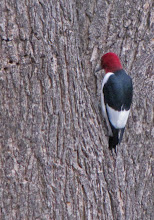
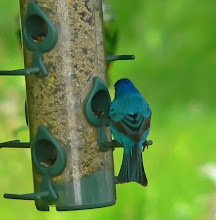
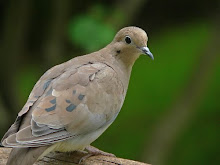
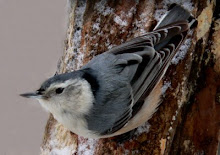
     Friends keeping me company while I do some spring garden cleanup.  
Gold finches are year round residents but migrating red polls are seen very briefly in my area.


Most of you gardeners and wildlife lovers know all this but I always get excited and want to write about it each spring.

The season is changing and migration  has begun.  We all love nature and want to be closer to it and a part of it.  This is an exciting time for bird lovers and bird watchers but a stressful time for the birds. Birds have a long journey of sometimes  more than a thousand miles to make  through parts of the country they are unfamiliar with.  They face severe hardships including lack of food, physical exhaustion, and extremes in weather,  They must navigate man made obstructions like communication towers and windmills which kill millions of birds.  And they do all this using methods that we don't completely understand.  Scientists think birds navigate using the same routes every year by means of the stars and the earth's magnetic fields.  (A lot of research shows that animals can feel the earth's magnetic pulls and understand the relationship of stars to their location.  To me this is nothing short of a miracle which nature has in abundance and people will probably never feel but we keep desperately trying to understand.)

If you are a bird lover, a bird watcher, or a bird feeder like me, you have your feeders filled to the brim and maybe some thistle socks added to your usual millet and sunflower feeders. Every year birds on their way to Canada stop at my feeders to get their fill of food and renew their energy resources.  This is an opportunity for me to see birds I only see briefly once a year.  Indigo buntings, red polls, grosbeaks, pine siskins, sap suckers and others don't spend the summer here but they pass through my area.

I hang at least one thistle sock on branches near my windows hoping to get some great bird views and great photos through the glass.  Don't worry about the thistle seed sprouting in your flower gardens.  Nijer seed is sterilized to prevent sprouting and maintain the high prices charged by growers.  Keep your eyes peeled and your camera ready.  Migrating birds usually hang out at feeders for several days regaining their strength before continuing their journey.


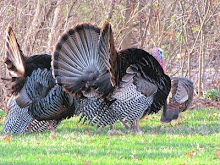
Above is the most recent 'migrater' to arrive back in my area.  For the last several years vultures have nested in the loft of a ramshackle old barn on a corner of my property.  I'm happy to see them back this year.    It's exciting to see them hovering overhead, never moving a wing, just hanging motionless in the air.  The first year they lived here it was a little disconcerting to see them sitting on the barn roof watching me work in the garden.  Since, I've gotten used to having them around.  I especially enjoy watching them teaching their young to swoop and soar around the barns.  

For those who love poems as much as I do:

Under the Vulture-Tree

BY DAVID BOTTOMS
We have all seen them circling pastures,
have looked up from the mouth of a barn, a pine clearing,   
the fences of our own backyards, and have stood   
amazed by the one slow wing beat, the endless dihedral drift.
But I had never seen so many so close, hundreds,   
every limb of the dead oak feathered black,

and I cut the engine, let the river grab the jon boat   
and pull it toward the tree.
The black leaves shined, the pink fruit blossomed   
red, ugly as a human heart.
Then, as I passed under their dream, I saw for the first time   
its soft countenance, the raw fleshy jowls
wrinkled and generous, like the faces of the very old   
who have grown to empathize with everything.

And I drifted away from them, slow, on the pull of the river,   
reluctant, looking back at their roost,   
calling them what I'd never called them, what they are,
those dwarfed transfiguring angels,
who flock to the side of the poisoned fox, the mud turtle
crushed on the shoulder of the road,
who pray over the leaf-graves of the anonymous lost,
with mercy enough to consume us all and give us wings.


Tuesday, March 24, 2015

Then all is silent and the snow,

 Falls settling soft and slow


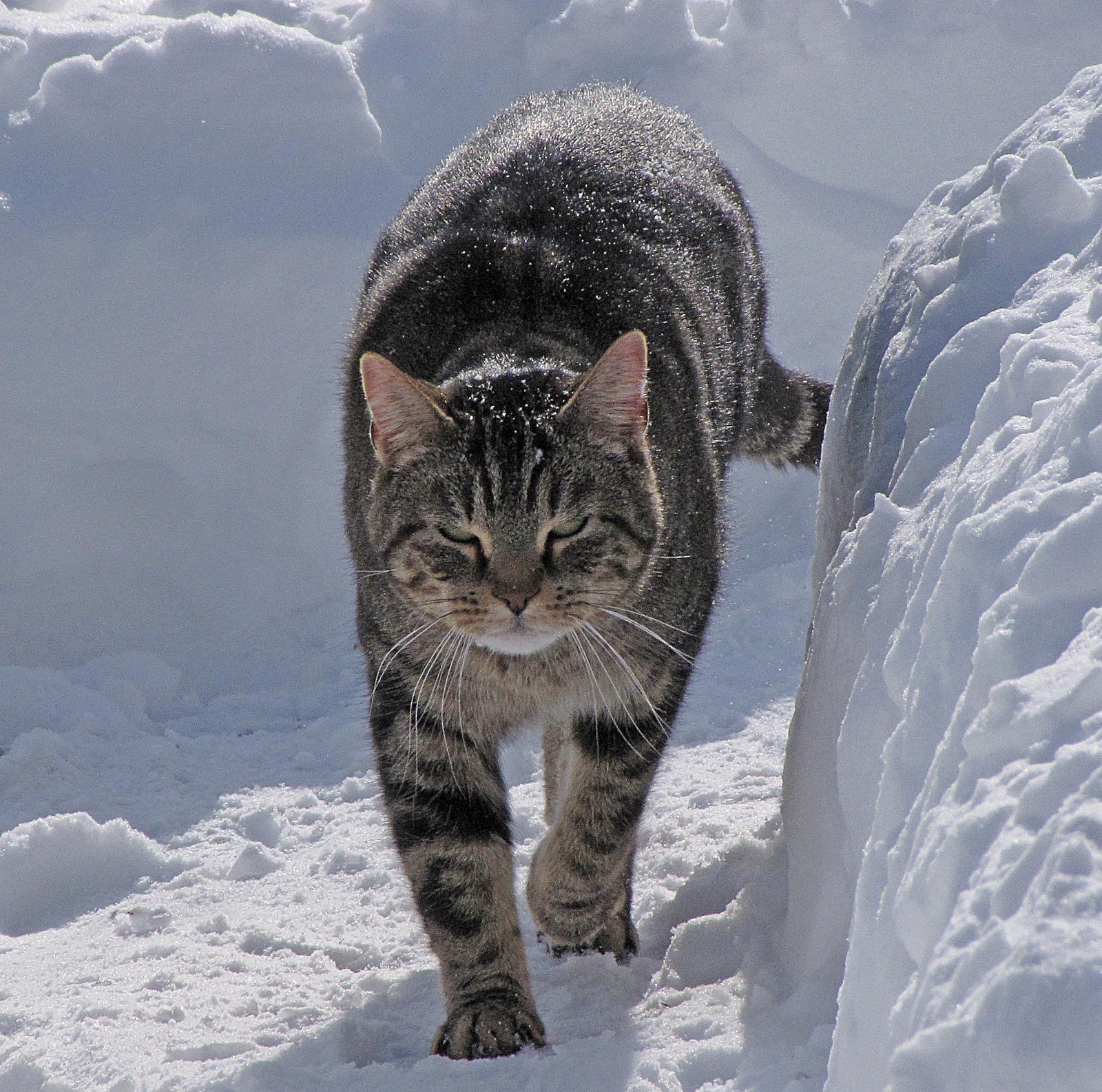
Winter isn't ready to give up her hold on northern Illinois.  She buried us in one of those heavy, wet snows that come mostly just before spring makes an appearance.  Too heavy to shovel snow; back breaking, heart attack snow.  Perfect snowball packing, snowman rolling snow.  


Snow that disappears in a few short days and leaves puddles and mud in it's wake.

But while it lasts, snow that dogs love.  


Snow that inspires races.


Snow that disappoints daffodils just emerging from a long sleep.  


Snow that looks perfect viewed through  kitchen windows.


Saturday, March 14, 2015

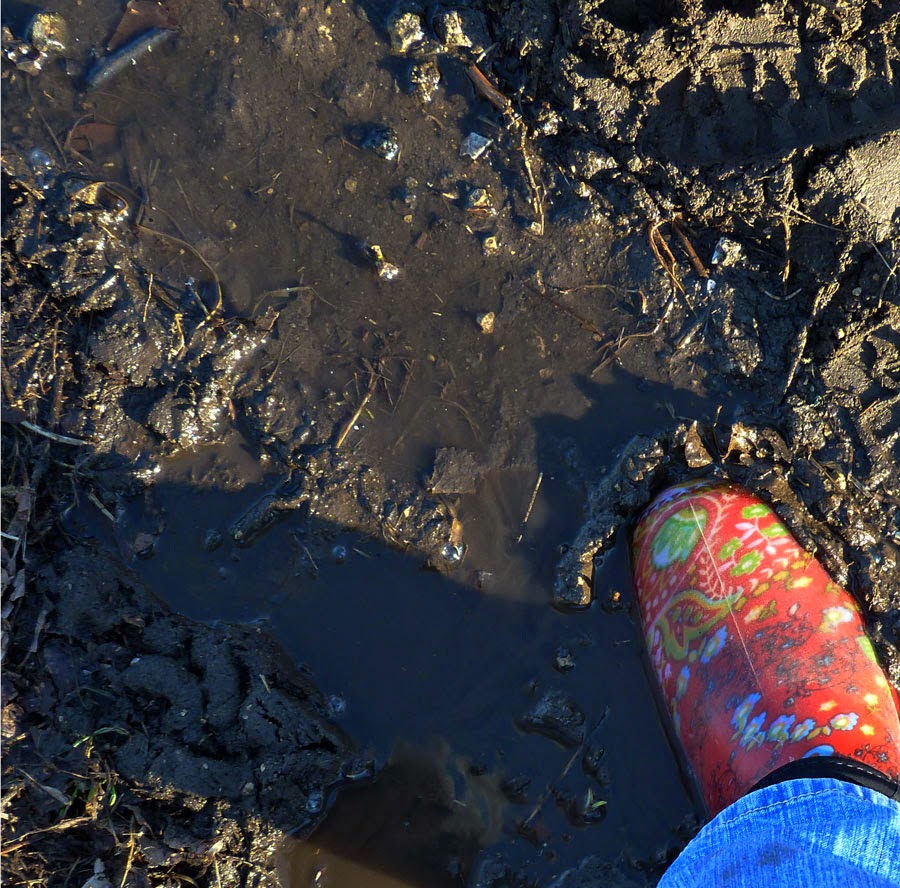
Mud Time

Snow melts and mud replaces it.  The ground is frozen a few inches below the surface so there is no place for the water to go.  


Nasty, boot sucking slime.  Just another cycle we have to get through every March. 


 I love my Sloggers.  So easy to clean, just hose the mud off.  They are one bright red spot in an otherwise trying time.  

Wish they made Sloggers for dogs.  

Now I know how Mom felt when three kids and a big dog sloshed into the kitchen without removing our boots or even  wiping them on the mat.  I can still hear her complain, “Out, out, out.  Take off those boots.  I could grow potatoes on this kitchen floor.”  This must be payback, Mom.  


Saturday, February 28, 2015

A spring by any name will not necessarily feel as sweet.

March 1st is the first day of spring.  Meteorological spring that is.  There are two first days of spring and I had to look up the exact definitions to get the idea clear in my mind. Meteorological seasons are split into four periods each three months long.  These conform to our Gregorian calendar.  Somehow this makes it easier for weather people and statisticians  to compare seasonal statistics and forecasts.  In some parts of the US, meteorological seasons may be accurate but the farther north one goes, the  more inaccurate they seem to be.  

The astronomical seasons are determined by the earth's elliptical orbit around the sun and the first day of spring begins on March 20 (the spring equinox) and runs to June 21. This is the more accurate definition of spring in the north because it is related to the changing orientation of sun which is what drives the warming of the earth. Friday we had the coldest day of the year 25-degrees below zero.  That doesn't sound like three days before spring.  

So tomorrow when all the TV weather forecasters are talking about the first day of spring, I will not pay much attention.  There is something dispiriting about nasty blizzards with a foot of snow which always come in March after the first day of meteorological spring.  I will know it's spring the same way people have known and celebrated for centuries.  Not by a calendar but by the spring equinox.  


This is the tunnel that leads to the bird feeders.


Cold feet.


Where am I and where is the back door?

  Toby serves as my resident groundhog.  If he goes outside and there is snow on the ground, he proclaims it isn't spring yet.  


Wednesday, February 18, 2015

Cold Comfort

It's cold here.  The foot of snow from weeks ago hasn't melted.  I don't usually pay any attention to wind chill numbers.  That's mostly hype the forecasters use to make winter weather sound more extreme and dramatic.   I have to admit, when they start talking about wind chills at 25 degrees below zero, you have to pay attention to that.  When we get a long running streak of weather like this, I start to blame my ancestors.  Why in the world didn't they settle in some nice coastal climate?

It's northern Illinois and it's winter and it could be worse. We just need to get through the rest of February and the first three weeks of March.

Here are scenes from around the farm.  Can you guess what the first picture is?


 Below the yard north of the house 

Below the pasture east of the house.

Actual temperatures below.  


Thursday, February 12, 2015

A Poor Wayfaring Stranger


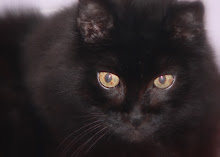
It was early morning a week before Thanksgiving.  I glanced at the indoor, outdoor thermometer beside the back door, 67 degrees inside 4 degrees outside.  I pushed open the door.  The dogs saw it before I did.  Something little and black streaking across the yard and into the barn.  The dogs were close behind but the barn door was partly closed and the dogs were too big.  It took me a few seconds to identify what I’d seen.  No squirrel, or rabbit, or possum or raccoon.  A kitten. 

What was a kitten doing more than a mile from the nearest house on a bitter cold November morning?  I searched the barn but the kitten was well hidden and wouldn’t come out.  I found the live trap and set it up in the barn bated with cat kibble.  An hour later the trap was sprung and a frightened kitten was inside.

I doubted if the kitten had walked across a mile or more of frozen corn stubble to get to my farm so the only explanation was that some good and kind animal lover had dumped her out of their car to die alone outside in the cold.   

You can’t just bring a stray cat into a house of healthy animals so we went to the vet.  Ear mites, fleas, skin problems, worms and malnutrition, but no upper respiratory.  The blood tests showed no FIP, FeLV or FIV (the dreaded alphabet diseases as my friend Judy calls them).   The kitten came home and lived on the porch, dosed with Revolution, until I was convinced she had no disease that could be transmitted to Toby or the dogs.

Because of the coming Thanksgiving holiday, I began to think of the kitten as a sort of  pilgrim. The dictionary says a pilgrim is a wayfarer, or a wanderer.  I know most of us think of pilgrims as part of a religious journey, and of course this does not qualify in that sense.  But in her plain little black and white coat, alone in a strange and hostile world,  I can't help but see the similarity.  Today, she is healthy and gaining weight.  A little like the Pilgrims we celebrate on Thanksgiving who came here seeking a better life, she made a hazardous journey and, at the end, found her new beginning.  


Friday, February 6, 2015

The Winter Gardener

I'm starved for something green and growing.  What does a person who loves the outdoors and gardening do in February in northern Illinois?  She gardens indoors of course.  I don't do it on a big scale.  My sister has orchids and huge old potted plants she overwinters on her sun porch.  I just have a few small plants that live on window sills and in the little greenhouse I found at Hobby Lobby.


Yesterday, I found a display of potted plants at a big box store.  Two little crotons came home with me zipped up inside my winter parka to keep them from freezing.

This will have to satisfy me until I can start some seeds in March.


Wednesday, February 4, 2015

Wednesday, August 27, 2014

Late August blooms

The weather has been hot and humid for the last few days interrupted by brief episodes of torrential rain.  The rain cools the air dramatically if only briefly.  Blooming in late August.  


 This goldenrod offers a little taste of the wild in my tame garden.  It self seeded here and I allowed it to stay.  Pollinating insects love this plant.  
Autumn Joy beginning to bloom.  I cut this plant back drastically in early July.

You can see the humidity in the air.    

These zinnias have bloomed forever.  Will try saving seeds for next year's garden

 A sunny section of the center garden

Topaz processed daylily photo
.

Saturday, August 16, 2014

Blooming through the hot, dry days of August.

In spite of the lack of rain in August, the garden has a lot of color


 Next year, lots more zinnias and sweet potato vines.  They perform beautifully in hot, dry weather.
 My favorite daylily.  I've never seen a larger or brighter one. 


Saturday, July 5, 2014

 Islands of trees amid a sea of corn. 


So simple, so lovely, yet the dreaded enemy of gardeners and farmers.

The dogs and I walked the length of our lane today.  A lovely day after a month of almost daily rain.  Everything is amazingly green.  Ireland, step aside, nothing is greener than spring time Illinois after a prolonged rainy season.  

This little wren chose the bird house right outside the dining room door.  How can such a tiny bird have such a big voice.  He sings all day long with very brief spells of quiet while he grabs a bug for the family.  


Cedar waxwings,  juvenile robins, and a catbird spent the day stripping the ripe fruit off my  amelanchier. 


Friday, May 16, 2014

Below, a photo of the old pasture beside my house.  It's gone now--plowed under.  It used to be the home of hundreds of birds.  Deer spent the daylight hours in the grove of trees across the year round creek.  There were apple and crababble trees, willows and wildflowers.  All gone.  Now it's a furrowed field of corn stubble growing ragweed and garlic mustard.  The year it was plowed and planted was the horrible draught of 2013.  The crops withered and died so the farmer abandoned it.  


The secluded lane to my farm.  Trees are gone now.  The farmer cut them down this spring.  Farmers detest trees.


Came across the poem below and loved it.  

The Golden Years

All I do these drawn-out days
Is sit in my kitchen at Pheasant Ridge,
Where there are no pheasants to be seen,
And last time I looked, no ridge.

I could drive over to Quail Falls
And spend the day there playing bridge,
But lack of a falls and the absence of quail
Would only remind me of Pheasant Ridge.

I know a widow at Fox Run
And another with a condo at Smokey Ledge.
One of them smokes, and neither can run,
So I’ll stick to the pledge I made to Midge.

Who frightened the fox and bulldozed the ledge?
I ask in my kitchen at Pheasant Ridge.

~ Billy Collins - former U S Poet Laureate


(“The Golden Years” hearkens back to a simpler time, when the purity of nature thrived, undisturbed by the destructive tendencies of human expansion. Locations with namesakes paying homage to the animals and geological formations found there are now representing them nominally only.)

Wednesday, February 2, 2011

The February 2011 Blizzard


40 mph winds pushing snow into 5-foot drifts across roadsways.


Off work today. Enjoying (and I'm using that term in a humorous way) the effects of the fourth worst blizzard in this county's recorded history. Luckily I wasn't around for the first three.

A weather emergency has been declared. Police are asking everyone to stay off the streets. The snowplows are clearing the roadways but the 40mph winds are driving the snow back onto cleared roads very quickly. Hundreds of motorists were stranded in snow drifts overnight, many had to be rescued with snow mobiles. Neighboring Boone County, which is very rural, has closed its roads. Anyone driving in Boone County will be issued a $200 ticket. Sounds harsh but the police just don't have the resources to rescue any more drivers stuck in drifts. Tow trucks are out pulling abandoned vehicles out of ditches and taking them to Woodman's parking lot to be picked up later by the owners.

Tonight the temperatures will be dropping to 10 degrees below zero. Things can't get much worse--I hope.


Trucks are loaded with salt and sand and ready to go.


As soon as it was light enough to see, I ventured out to feed the birds. The weatherman wasn't kidding when he said there were 5-foot drifts out there. Two feet of snow piled against my back door made it a challenge open.

Had to push Aggie out the door, she wasn't going out there if she could help it. Now she is watching me with huge, accusing eyes, afraid I'll make her go outside again. I'll let Toby out in a little while. He will love it. Wish I had Toby's outlook on life. He sees every day as a gift and finds fun in every situation.

Later today or tomorrow, Mark from the shop will come and plow me out. Meanwhile, I'm stocked up on comfort food and good books. Maybe a nap this afternoon...

Wednesday, August 18, 2010

Offline for a while

Due to an illness in the family, I will remain offline for a time. I miss all my blogging friends and hope to be back soon.

Marnie

Monday, August 9, 2010

The only good thing about high humidity is foggy mornings. I know, fog is dangerous if you're driving but it's also very beautiful. It changes the landscape, makes familiar scenes look strange and other worldly. Beyond a visible circle, things become mysterious. Anything is possible.


Today, I'm in the middle of a bathroom remodel so I set blogger to publish this post automatically. Fingers crossed blogger works. And fingers crossed that the remodel goes well. In the past I've found that doing anything to an old house can result in disaster and chaos. We'll see.

Wednesday, August 4, 2010

Flowers always make people better, happier and more helpful; they are sunshine, food and medicine to the soul. ~ Luther Burbank


I planted Joe Pye in my garden three years ago. This year it has finally come into its own. The first two years, it made a disappointing showing and I considered taking it out. This year, it has more than made up for the failings of the past.


Maybe I better qualify that statement. I have two Joe Pyes, one is Little Joe pictured above. Right now, Little Joe is the star of my garden. I also have Chocolate Joe Pye which was planted at the same time. So far, Chocolate hasn't done much to repay my investment of time and real estate. For now, I'm forgetting about Chocolate and concentrating on Little Joe.

Joe Pye is usually a very large garden plant reaching eight feet in height. Tina at IN THE GARDEN featured the taller Joe Pye on her blog Wednesday. Little Joe is a smaller cultivar, which tops out a little over four feet tall and about four feet wide in my garden. I like its compact and rounded habit. There is at least one other dwarf cultivar called Phantom which is supposed to be around three feet tall. The photo below shows Little Joe blooming behind the rudbeckia and cleome.


Airy clusters of tiny lavender flowers remind me of a cross between lilacs and a smoke tree. So far there have been no pests or disease problems with my plants. I debated with myself for a while before adding these plants because of their moisture requirements. Over the last five years, I've tried to eliminate water wasters and concentrate on more xeric plants but every now and then something slips past my better judgment. Our weather was pretty dry in late May and June and Joe, who is planted in full sun, showed some wilting and required watering once a week.

Even though Joe Pye is not xeric, it was a good choice. It is both beautiful and loved by butterflies. Joe Pye begins to bloom just as the agastache and the purple coneflowers are fading so the butterflies can remain in my garden for a longer period.


The photo below is Little Joe in tight bud in early July.


Tossed, tangled, whirled and whirled above,
Like a limp rose-wreath in a fairy dance.


Thou didst not know, who tottered, wandering on high,
That fate had made thee for the pleasure of the wind,
With those great careless wings,
Nor yet did I.
~ Robert Frost from this Butterfly poem